The Culinary Migration: How German Immigrants Created a Masterpiece
The Flavor Science: Mustard Enantiomers and Pork Lipid Balancing
The Raw Ingredient Architecture
Step-by-Step Production Guide
Core Techniques of the Pitmaster: Emulsification Without Heat
Creative Flavor Adaptations to Try
Common Mistakes: How to Prevent Your Mustard Sauce From Tasting Too Harsh
The Ultimate Serving and Pairing Protocol
Wood Smoke Synergy: Matching Your Wood to Your Gold
Frequently Asked Questions (FAQ)
Official Recipe Card: Nova Recipes Authentic Carolina Gold Sauce
The Vibrant Southern Tradition of Yellow Gold BBQ
We have all been there: you pull a beautifully smoked, wood-infused pork butt or a rack of tender ribs off the grates, and you reach into the refrigerator to find nothing but thick, dark, grocery store barbecue sauces. Traditional Kansas City-style glazes offer a comfortable, nostalgic rhythm, but their heavy reliance on high-fructose corn syrup and intense molasses can easily mask the delicate oak or hickory smoke infused into the meat. If you want a condiment that delivers a vibrant explosion of sharp, vinegary tang followed by a perfectly balanced caramel sweetness and a warm back-end spice, mastering this Carolina Gold barbecue sauce from scratch is your ticket to outdoor cooking mastery.
While most of the world associates backyard barbecues exclusively with tomato- or vinegar-based liquids, a specific region of the American South marches to its own rhythm. Born from rich historical roots in the lowcountry, this yellow mustard-based masterpiece completely redefines what a traditional cookout sauce can achieve. It takes less than 10 minutes of active mixing on your counter, requires no tedious cooking steps, and infuses an immediate restaurant-quality identity into your grilling menu. Whether you are a seasoned pitmaster or a weekend warrior firing up a backyard griddle, adding this golden asset to your sauce rotation changes the entire game.
What is Carolina Gold Barbecue Sauce?
An authentic Carolina Gold barbecue sauce recipe is a smooth, vibrant, mustard-driven condiment sharpened with a distinct balance of sour vinegars, sweet sugars, complex umami binders, and dry aromatic spices. Unlike its dark crimson counterparts found in Texas or Kansas City, this sauce uses yellow mustard as its structural carrier rather than tomato paste, tomato sauce, or ketchup.
                    [ Prepared Yellow Mustard Base ]
                                   |
         +-------------------------+-------------------------+
         |                         |                         |
 [ Acid Tang Matrix ]       [ Sweet Counterweights ]  [ Umami & Spice Anchors ]
 - Apple Cider Vinegar      - Dark Brown Sugar        - Worcestershire Sauce
 - Fresh Lemon Juice        - Premium Raw Honey       - Cayenne / Garlic Powder
This structural variation yields a highly pourable, silky consistency with a beautiful golden-yellow sheen. The sauce clings aggressively to meat fibers without forming a heavy, sticky shell, acting as a bright, liquid flavor enhancer that cuts through rich fats while highlighting the natural savoriness of low-and-slow wood smoking. It is thin enough to penetrate into shredded meat, yet stable enough to glaze beautiful bark during the final minutes of a cook.
The Culinary Migration: How German Immigrants Created a Masterpiece
To understand why South Carolina clings to its signature mustard base, one must travel back to the mid-1700s. During this era, thousands of German immigrants were drawn to the fertile lands of the midlands and lowcountry regions of South Carolina. These settlers brought their deep-rooted European culinary traditions with them, notably an absolute obsession with pairing rich, roasted pork dishes with sharp, pungent, and sour mustard seeds.
As these families integrated into the emerging Southern culture of pit-smoked whole-hog barbecue, they naturally adapted their traditional home dressings. They combined the prepared yellow mustard of their heritage with local ingredients like sugarcane molasses, wild honey, and distilled vinegar. This fusion of German flavor profiles and classic American low-and-slow wood smoking birthed a unique regional style that remains an essential pillar of Southern barbecue identity to this day. When you pour this sauce, you are tasting a dynamic piece of living food history.
The Flavor Science: Mustard Enantiomers and Pork Lipid Balancing
The deeply addictive nature of a homemade mustard base barbecue sauce relies heavily on organic food chemistry. Pulled pork, smoked pork belly, and rich beef cuts are naturally packed with heavy saturated lipids (fats) and salt. While these components make food taste satisfying initially, fat molecules coat the tongue, causing your taste receptors to feel fatigued or sluggish after just a few bites.
This South Carolina gold standard fixes that issue by setting up an exceptional fat-to-acid flavor loop. Yellow mustard seeds naturally contain allyl isothiocyanate, a pungent organic sulfur compound that stimulates the sensory nerves in your nasal passages and tongue. When paired with the high concentrations of acetic acid inside apple cider vinegar, this combination pierces right through the tongue-coating fats of rich pork, refreshing your palate instantly.
Simultaneously, the introduction of fructose from real honey and dark brown sugar coats the interior of your mouth, softening the raw bite of the vinegar and mustard. This interaction protects your taste buds from being overwhelmed by acid, allowing you to appreciate the subtle, earthy notes of garlic, onion, and wood smoke before a clean warmth emerges on the finish. This structural balance resets your taste receptors with every bite, ensuring that the final taste of your meal feels just as bright and dynamic as the very first dip.
The Raw Ingredient Architecture
To achieve a perfectly balanced, authentic golden hue, using clean, whole-food components is essential. Avoid substitutions to preserve that signature Lowcountry bite:
Prepared Yellow Mustard: The undeniable backbone of the sauce. Avoid stone-ground, dijon, or spicy brown variants for this specific style; simple, bright yellow mustard provides the clean turmeric color, natural vinegar balance, and smooth texture required for a true Carolina profile.
Apple Cider Vinegar: Introduces a complex, fruity acidity that thins out the heavy mustard and sharpens the overall flavor loop. It brings a mild apple sweetness that white vinegar simply cannot mimic.
Dark Brown Sugar: Supplies an earthy molasses complexity that rounds out the sharp vinegar and grounds the base of the sauce with deep caramel tones.
Premium Raw Honey: The real secret to a competition-grade sheen. Honey adds a velvety flowability, a clean sweetness, and a gorgeous glossy coat that helps the sauce cling to meat surfaces.
Worcestershire Sauce: Infuses a massive layer of savory umami depth. Packed with fermented anchovies, molasses, and tamarind, it anchors the sweet and sour liquids together.
Fresh Lemon Juice: Provides a secondary layer of bright, clean citric acid that lifts the top notes of the sauce, contrasting nicely with the heavier vinegar.
Garlic Powder & Onion Powder: These fine aromatics dissolve smoothly into the liquid base without introducing gritty raw chunks or turning bitter.
Cayenne Pepper: Delivers a gentle, back-end kick of dry heat to wake up the palate without overwhelming the companion proteins.
Step-by-Step Production Guide
Phase 1: Assembling the Mixing Assets
Grab a medium, non-reactive glass, ceramic, or stainless steel mixing bowl and a sturdy wire whisk. Because this sauce contains highly acidic vinegars and mustards, avoid using unlined aluminum or raw copper bowls; reactive metals can chemically interact with the acids, imparting an unpleasant, metallic off-taste into your beautiful golden glaze. Ensure your workspace is clean and your storage jars are thoroughly sanitized.
Phase 2: Layering the Aromatics
Measure out exactly one cup of your prepared yellow mustard baseline and add it directly to the center of your bowl. Carefully add your apple cider vinegar and fresh lemon juice around the edges. Next, add the packed dark brown sugar and raw honey straight into the center. Finally, dust your fine dry spices—the garlic powder, onion powder, cayenne pepper, and freshly cracked black pepper—evenly across the surface of the wet mixture.
Phase 3: The Whisk and Emulsification Loop
Grab your wire whisk and blend the mixture continuously using a firm, circular motion for 60 to 90 seconds. Pay close attention to the bottom corners of the bowl to ensure that the dark brown sugar crystals dissolve completely and the thick honey merges smoothly into the vinegar. You want the liquid to turn into a uniform, silky gold cream with zero remaining streaks of unmixed oil or spice clumps.
Phase 4: The Cold Thermal Aging Window
While you can technically brush this sauce onto meat immediately, letting it rest inside the refrigerator elevates the flavor significantly. Transfer the fresh golden liquid into clean glass jars or a plastic squeeze bottle and seal tightly. Let it sit in your refrigerator for a minimum of 2 to 4 hours, though overnight is preferred. This cooling window allows the dry spices to hydrate fully, blending smoothly with the mustard oils to create a much more complex, well-rounded finish.
Core Techniques of the Pitmaster: Emulsification Without Heat
A common mistake made by amateur cooks is simmering a mustard-based sauce on the stove top in an attempt to thicken it. Unlike tomato paste, which benefits from heat to caramelize its sugars and reduce its water content, prepared yellow mustard contains delicate volatile flavor networks that break down under direct heat. Boiling a mustard sauce can dull its sharp, vibrant punch and cause the natural vinegar emulsion to separate into a greasy layer.
To achieve the ultimate tournament-grade thickness without heat, real pitmasters rely on mechanical cold emulsification. By whisking the thick, natural solids of prepared yellow mustard with the natural glucose chains of raw honey and the fine crystalline structures of packed brown sugar, you build a stable physical matrix. The honey acts as a natural binder and thickening agent, absorbing the thin apple cider vinegar while suspended in the mustard base. This yields a dense, glossy, and pourable glaze that holds its shape beautifully on hot meat without ever needing to touch a hot stove.
Creative Flavor Variations to Try
This smooth, tangy mustard baseline reacts beautifully to custom flavor upgrades if you want to push your menu in an unexpected direction:
The Tropical Sweet-Heat Swap: If you want to introduce an incredible fruit-forward profile designed to pair with smoked chicken or ham, fold a small spoonful of fruit-forward preserve into the mixture. Discover how tropical sugars and heat interlock flawlessly by checking out my Pineapple Hot Sauce Recipe or my step-by-step Mango Habanero Sauce Recipe.
The Extra Sticky Glaze Alternative: If you want a more traditional, high-gloss finish designed specifically for brushing onto ribs over open flames, look at the boiling and caramelization techniques inside my popular Cherry Habanero Glaze Recipe.
The Creamy Salad Modification: Transform this sharp golden sauce into an incredible dressing or dip for crispy chicken tenders by folding in a few tablespoons of real mayonnaise or sour cream. See how to balance rich dairy fats with fresh aromatics by reading my Homemade Dipping Sauce Recipes.
The Ultimate Fiery Challenge: If you are cooking for a crowd of hardcore heat lovers, replace the gentle pinch of cayenne with an ultra-spicy dry rub swap. To see how to manage serious heat levels safely, explore the processing steps inside my concentrated Carolina Reaper Powder Recipe.
Common Mistakes: How to Prevent Your Mustard Sauce From Tasting Too Harsh
Working with a heavy mustard and vinegar base is incredibly straightforward, but missing a few small structural details can lead to balance issues:
1. The Sauce Delivers a Harsh, Overwhelming Vinegar Burn
If you sample the sauce immediately after mixing and find the initial vinegar bite is too aggressive, do not add more mustard. Instead, whisk in an extra teaspoon of raw honey or brown sugar. Increasing the sweet sugars will naturally coat your tongue, slowing down the capsaicin and acid absorption rates and bringing the profile back into balance. Also, remember that the vinegar bite mellows significantly after its refrigerator resting period.
2. The Granulated Sugars Create a Gritty Texture
This occurs if you use coarse sugars and fail to blend the mixture long enough before refrigeration. Always prioritize that firm 60-to-90-second whisking loop to dissolve the sugar crystals, and let the sauce rest in the fridge to allow the remaining solids to melt smoothly into the liquid acids.
3. Brushing the Sauce on Too Early During Smoking
Because this sauce contains real sugars and honey, brushing it onto meats during the early hours of a long smoke session will cause the sugars to burn over the direct heat. This yields a bitter, blackened crust. Always wait until the final 15 to 20 minutes of grilling or smoking to apply your golden glaze, allowing it just enough time to warm through and set into a sticky coating.
The Ultimate Serving and Pairing Protocol
This spectacular Carolina Gold barbecue sauce recipe belongs at the absolute center of your next cookout layout. Its bright acidity and savory depth make it an incredible match for rich proteins.
The absolute traditional presentation: drizzle a generous amount of this golden sauce directly over a mountain of hot, shredded pulled pork or use it as a finishing glaze for thick-cut pork ribs. For an incredible dual-sauce options board, place it side-by-side with my rich tomato-based Homemade BBQ Sauce Recipe or my smoky Homemade Red Chili Sauce Recipe.
2. Grilled Chicken Sliders and Poultry
Brush this tangy glaze onto smoked chicken thighs, grilled turkey patties, or crispy chicken sliders. Its bright acidity cuts through poultry fats beautifully. For an incredible table layout next to alternative burger toppings, serve it alongside my classic Burger Sauce Recipes or my savory garlic Cowboy Butter Sauce.
3. Crispy Sides and Dippers
Set out individual ramekins of this gold sauce as an unexpected, gourmet dipping asset for hot french fries, onion rings, or soft pretzel bites. If you are setting up a diverse game-day wing station, pair it next to a platter coated in my classic Wing Sauce Recipes or my buttery Homemade Cajun Honey Butter Wings Sauce.
Wood Smoke Synergy: Matching Your Wood to Your Gold
If you are using a pellet grill, an offset smoker, or a ceramic charcoal cooker, the type of wood smoke you choose will directly interact with the flavor profile of your Carolina Gold sauce. Because this sauce leans heavily on sharp mustard oils and bright apple cider vinegar acids, it pairs best with wood varieties that balance its punch:
Pecan Wood: The absolute premier match. Pecan smoke delivers a distinctively sweet, nutty aroma that rounds out the sharp vinegar bite of the gold sauce beautifully without overpowering it.
Apple or Cherry Wood: These classic fruitwoods infuse a mild, sweet, and mellow fruit smoke into the meat bark. The natural fruitiness of apple or cherry smoke links up flawlessly with the top notes of apple cider vinegar and fresh lemon juice inside the sauce.
Hickory Wood: The traditional choice of the deep South. Hickory delivers a bold, heavy, bacon-like smoke profile. While excellent for pulled pork, ensure you apply the Carolina Gold sauce intentionally as a finishing drizzle rather than a heavy mopping liquid, so the strong hickory smoke and pungent mustard don’t battle on the tongue.
Frequently Asked Questions
How long does homemade Carolina Gold BBQ sauce last in the fridge?
Stored inside a clean, airtight glass jar or plastic squeeze bottle inside your refrigerator, this sauce will easily remain fresh and stable for up to 1 month. The high natural acidity of the prepared mustard and apple cider vinegar acts as an exceptional natural preservative.
Can I use white vinegar instead of apple cider vinegar?
While plain white vinegar will technically work to thin out the sauce, it lacks the subtle fruitiness and round depth that apple cider vinegar provides. White vinegar delivers a much harsher, one-dimensional acid bite that can throw off the delicate balance of the honey and spices.
Is this South Carolina mustard sauce recipe gluten-free?
To guarantee this sauce is 100% gluten-free, you must verify that your chosen brand of Worcestershire sauce is certified gluten-free (as some traditional variants contain barley malt vinegar). The remaining baseline components are natively gluten-free, dairy-free, and vegan-friendly.
Can I heat this sauce on the stove top to thicken it up?
Simmering is not recommended for this style of sauce. Heating prepared yellow mustard on a stove top can actually break down its delicate flavor volatile networks, weakening its signature punch. If you want a thicker sauce consistency, simply reduce the cider vinegar volume slightly or whisk in an extra tablespoon of honey.
Why do you use both honey and brown sugar as sweeteners?
Using both creates the ultimate flavor and structural profile. Dark brown sugar supplies an earthy, molasses complexity that grounds the sharp vinegar, while raw honey adds a gorgeous glossy sheen and a smooth, velvety flowability that allows the sauce to slide perfectly out of a squeeze bottle.
Whipping up this legendary South Carolina classic proves that you don’t need a shelf full of grocery store bottles to unlock high-definition, competitive barbecue flavor right in your own backyard. By unlocking the simple chemistry of mechanical cold emulsification and understanding how sharp mustard sulfur oils seamlessly slice through heavy meat lipids, you gain absolute control over your outdoor menu. Whether you choose to pour it generously over a mountain of hot shredded pulled pork, brush it onto smoky chicken thighs, or set it out as a premium dipping asset for extra-crispy french fries, this 10-minute yellow gold standard delivers a knockout punch.
Did you whip up a beautiful, shimmering batch of this South Carolina masterpiece? I want to see your ultimate backyard pulled pork spreads and smoked poultry setups! Take a photo of your golden sauce bottle or your dinner plate layout and tag @novarecipes on Instagram so I can showcase your kitchen mastery to our global culinary family!
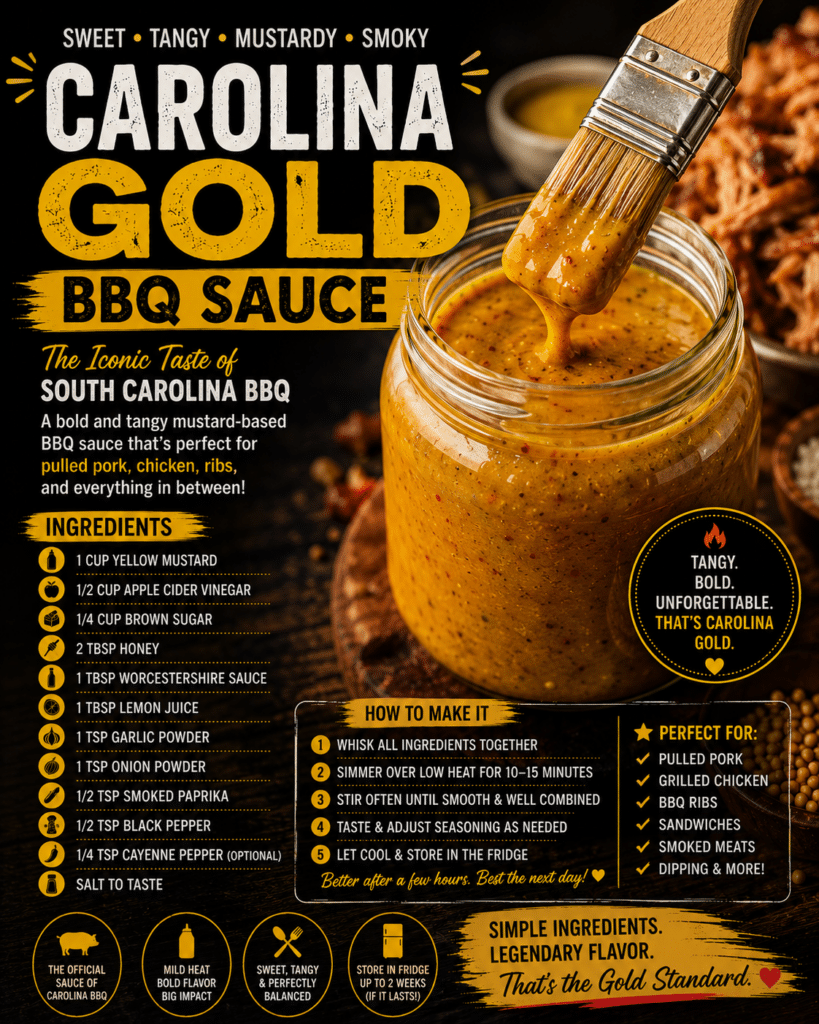
* 1 cup prepared yellow mustard * 1/4 cup apple cider vinegar * 1/4 cup dark brown sugar, packed * 2 tbsp premium raw honey * 1 tbsp Worcestershire sauce * 1 tsp lemon juice * 1/2 tsp garlic powder * 1/2 tsp onion powder * 1/4 tsp cayenne pepper * 1/4 tsp black pepper
Directions
1. ASSEMBLE THE BASE In a clean, non-reactive glass or stainless steel mixing bowl, measure out the prepared yellow mustard baseline.
2. LAYER THE FLAVOR BUILDERS Add the apple cider vinegar, dark brown sugar, raw honey, Worcestershire sauce, lemon juice, garlic powder, onion powder, cayenne pepper, and black pepper directly over the mustard.
3. WHISK TO EMULSIFY Grab a wire whisk and stir the mixture vigorously for 60 to 90 seconds using a firm, circular motion until the brown sugar crystals dissolve completely and the liquid turns silky smooth.
4. COLD THERMAL AGING Pour the golden sauce into a clean glass jar or squeeze bottle and seal tightly. Place in the refrigerator for a minimum of 2 hours to allow the aromatics to bloom fully before serving. ====================================================================