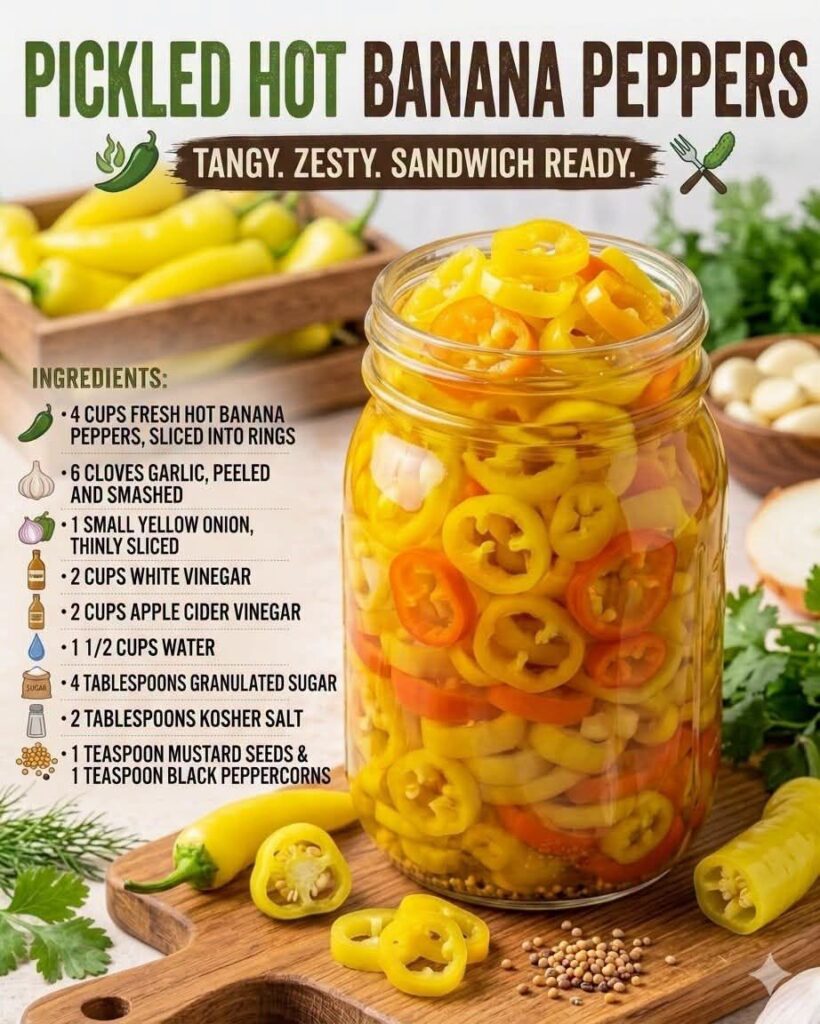
We have all been there: you assemble a towering, beautiful deli sandwich, grill up a juicy backyard burger, or lay out a fresh plate of street tacos, and your countertop toppings feel completely standard. Store-bought pickled pepper rings offer a convenient crunch but are frequently swimming in mass-industrial preservatives, artificial yellow dyes, and stale, muted vinegars. If you want a punchy, vibrant, and tangy kick that starts with a crisp bite and finishes with a bright, mouth-watering heat, mastering this easy pickled banana peppers recipe from scratch is your ultimate kitchen upgrade.
What starts as a simple project to save a handful of garden peppers quickly turns into a total pantry obsession. Instead of settling for muddy flavors from a commercial jar, this quick refrigerator method locks in the raw, sunny perfume of fresh chiles. It requires less than 20 minutes of total kitchen prep, uses everyday cupboard staples, and creates a beautifully balanced brine that transforms casual weekday lunches into restaurant-quality meals. Once you keep a jar of these bright rings in your fridge door, you will find yourself shaking them onto almost everything.
What Makes a Perfect Pickled Hot Banana Pepper?
An authentic pickled banana peppers recipe delivers a sharp, clean snap followed immediately by a wave of tangy, spiced vinegar. Unlike fully cooked or processed shelf-stable preserves, a premium refrigerator quick-pickle keeps the structural cell walls of the pepper ring intact, ensuring a satisfying crunch with every single bite.
This structural integrity is what separates an artisan batch from soggy, commercial alternatives. By pouring a heated, well-balanced brine directly over freshly sliced raw rings and chilling them immediately, the peppers cure cleanly without losing their bright yellow color or structural crunch.
The Brine Chemistry: Balancing Acidity and Crispness
The secret behind a highly addictive refrigerator pickle relies entirely on simple food science. Banana peppers carry a mild-to-moderate heat profile, ranging from a gentle 0 to 500 Scoville Heat Units (SHU) for sweet varieties, up to around 5,000 SHU for hot banana pepper strains. They possess a delicate, thin outer skin and a fleshy interior wall packed with moisture.
To convert these raw chiles into an acidic, mouth-watering table asset, we build an osmotic brine canopy using a balanced 1:1 ratio of distilled white vinegar and filtered water. The high acidity of the vinegar safely drops the pH level of the solution, which prevents spoilage while curing the raw pepper fibers.
To ensure the pepper rings maintain an incredible crunch rather than turning soft and mushy, the salt in the brine draws out excess water from the vegetable tissues. At the same time, keeping the cooking time minimal prevents the high ambient heat from melting down the cell-wall pectins. This results in a highly stable, punchy pickle that delivers an unmistakable pop of texture on your palate.
The Raw Ingredient Architecture
To guarantee a clean flavor profile and excellent storage stability, choosing pristine ingredients is essential. Avoid using table salts containing additives to ensure a clear brine:
Fresh Hot Banana Peppers: Look for firm, heavy peppers with smooth, bright yellow-green skins and zero soft spots or dark blemishes. You will slice them into uniform rings.
Distilled White Vinegar: Provides the ideal clean, neutral acid baseline that allows the raw, herbal fragrance of the banana peppers to shine through without being masked by heavy fruit notes.
Kosher Salt or Pickling Salt: Non-negotiable for crystal-clear results. Avoid standard iodized table salt; its built-in anti-caking agents and iodine will turn your beautiful brine cloudy and can introduce a faint metallic aftertaste.
Granulated Sugar (Optional): A small touch doesn’t make the peppers sweet; instead, it rounds out the sharp vinegar notes, softening the acidic bite on the back of your throat.
Fresh Garlic Cloves: Smashed and dropped directly into the jars to infuse the brine with a beautiful, savory depth.
Whole Black Peppercorns & Mustard Seeds: Add classic, peppery top notes and aromatic warmth to the pickling liquid as it cures.
How to Make Pickled Banana Peppers: Step-by-Step Production Guide
Phase 1: Slicing and Jar Packing
Wash your fresh banana peppers thoroughly and pat them completely dry. Slice off the tough green stem caps. Cut the peppers into uniform rings, roughly 1/4-inch thick. If you prefer an exceptionally clean look with a slightly milder kick, you can gently shake or rinse the loose seeds out of the cut rings before packing them. Peel your fresh garlic cloves and smash them lightly with the flat side of your knife. Drop the garlic, mustard seeds, and whole peppercorns into the bottom of a clean, quart-sized glass jar, then pack the pepper rings tightly on top, leaving about a half-inch of space at the top of the jar.
Phase 2: Simmering the Brine
In a small stainless steel saucepan, combine your distilled white vinegar, filtered water, kosher salt, and sugar. Place the pan over medium-high heat and bring the liquid to a gentle simmer. Use a wooden spoon to stir the mixture continuously for 1 to 2 minutes until the salt crystals and sugar dissolve completely into the liquid base. Once the brine is clear and hot, remove it from the stove.
Phase 3: The Hot Pour and Seal
Carefully pour the hot pickling brine directly into the glass jar over your packed banana pepper rings. Ensure the liquid completely submerges all the peppers, leaving about a 1/4-inch of headspace at the very top. If needed, use a clean plastic utensil to gently press down on the peppers to release any trapped air bubbles. Wipe the rim of the jar clean with a damp cloth, twist the lid on firmly, and let the jar sit undisturbed on your counter until it cools down to room temperature.
Phase 4: The Refrigerator Cure
Once the jar feels cool to the touch, transfer it straight into the coldest section of your refrigerator. While you can technically sample them after a few hours, letting the jar cure undisturbed for at least 24 to 48 hours allows the brine to fully penetrate the pepper rings. This patience rewards you with a deeply infused, tangy flavor and a satisfying, crisp crunch.
Creative Flavor Infusions to Customize Your Jars
This foundational refrigerator brine template serves as an exceptional springboard for building customized Homemade Pickles and condiments across your digital recipe catalog:
The Quick Garden Preservation Mix: If you want to expand your quick-pickling skills to classic garden cucumbers instead, review my crisp recipe for Refrigerator Pickles.
The Vibrant Red Onion Accent: For a stunning, bright pink countertop asset that uses a similar quick-brine setup to elevate street food textures, check out my simple Pickled Red Onions.
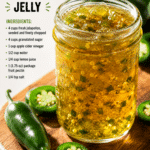
The Pure Fruit Jelly Matrix: If you prefer preserving fresh green chiles inside a high-gloss, spreadable sweet gelatin canopy for cheese boards rather than a liquid brine, browse my live Easy Jalapeno Hot Sauce or explore my freshly posted Easy Jalapeno Jelly Recipe.
Common Mistakes: How to Keep Your Pickled Peppers Extra Crunchy
Quick-pickling is incredibly straightforward, but bypassing small structural rules can lead to texture or appearance issues:
1. The Pepper Rings Turn Soft and Soggy
This happens if you boil the banana pepper rings directly inside the saucepan with the brine, which cooks down their delicate cell structures. Always pack your pepper rings raw into the glass jar and pour the hot brine over them. This flash-heats the outer skin to lock in color while preserving that essential, crisp bite.
2. The Pickling Brine Looks Cloudy or Dark
Cloudiness is usually caused by using standard table salt containing anti-caking starches, or using unfiltered tap water packed with heavy minerals. Always stick to pure kosher salt or pickling salt combined with filtered water to ensure a crystal-clear presentation.
3. The Pickles Taste Aggressively Sour or Bitter
If the vinegar bite completely overpowers the natural, floral aroma of the banana peppers, your brine ratio was likely off or you skipped adding the sugar asset. The small touch of sugar is critical because it tempers the sharp edge of the white vinegar without turning the recipe into a dessert syrup.
The Ultimate Serving and Pairing Protocol
This spectacular, crisp, and completely irresistible pickled banana pepper recipe belongs at the front of your refrigerator. Its bright acidity cuts through rich fats and deep savory profiles beautifully:
1. Towering Deli Sandwiches and Hoagies
The absolute premier presentation: layer these tangy yellow rings generously into classic Italian subs, turkey clubs, grilled paninis, or loaded wraps. For an incredible deli configuration, pair them alongside sandwiches dressed in my garlic-infused Creamy Garlic Aioli or my smooth Burger Sauce Recipes.
2. Game-Day Pizzas and Loaded Appetizers
Scatter a handful of these hot rings across fresh out-of-the-oven pizzas, loaded nachos, or fold them into party dips. If you are assembling a full watch-party spread, present these pickles right next to a platter of my crispy Wing Sauce Recipes or a bowl of my rich Buffalo Chicken Dip.
3. Backyard Cookouts and Street Tacos
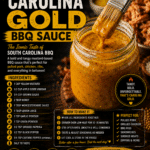
Top off your grilled hot dogs, smash burgers, and slow-cooked carnitas tacos with these punchy rings. For an amazing cookout layout, serve them side-by-side with alternative savory meat enhancers like my authentic, tangy Carolina Gold Barbecue Sauce or my rich Homemade BBQ Sauce Recipe.
Frequently Asked Questions
How long do homemade refrigerator pickled banana peppers last?
Stored securely inside a clean, airtight glass jar inside your refrigerator, these pickled pepper rings will easily remain fresh, tangy, and remarkably crunchy for up to 2 to 3 months. Always ensure the rings stay fully submerged beneath the brine liquid.
Can I use apple cider vinegar instead of white vinegar?
Absolutely! Swapping out a portion or all of the white vinegar for apple cider vinegar adds a subtle, fruity sweetness and a slightly softer acid profile to the brine. It will give your pickling liquid a warmer, light amber hue.
Is this quick-pickle recipe safe for long-term pantry storage?
No. This is a dedicated refrigerator quick-pickle method, meaning it has not undergone the hot-water-bath canning process required to safely store jars at room temperature in a cupboard. Keep this batch chilled at all times.
Can I use this same brine recipe for other types of garden peppers?
Yes! This universal pickling brine behaves beautifully over a wide variety of chiles. You can use it to pickle sliced jalapenos, serranos, cherry peppers, or even sweet bell peppers using the exact same step-by-step production method.
====================================================================
               NOVA RECIPES - OFFICIAL RECIPE CARD
====================================================================
Recipe: Quick and Crunchy Refrigerator Pickled Banana Peppers
Prep Time: 15 Minutes | Cure Time: 24 Hours | Yield: 1 Quart Jar
====================================================================

INGREDIENTS:
* 5-6 large fresh hot banana peppers, washed and sliced into rings
* 2 cloves fresh garlic, peeled and lightly smashed
* 1 tsp whole yellow mustard seeds
* 1 tsp whole black peppercorns
* 1 cup distilled white vinegar
* 1 cup filtered water
* 1 tbsp kosher salt
* 1 tbsp granulated white sugar

METHOD:

1. PACK THE JARS
   Slice your clean banana peppers into uniform 1/4-inch rings (discarding
   the stems). Drop the smashed garlic cloves, mustard seeds, and whole
   black peppercorns into the bottom of a clean quart glass jar. Pack the
   raw pepper rings tightly into the jar on top of the spices.

2. SIMMER THE PICKLING BRINE
   In a small stainless steel saucepan, combine the distilled white vinegar,
   filtered water, kosher salt, and granulated sugar. Place over medium-high
   heat and bring to a gentle simmer, stirring occasionally until the salt
   and sugar crystals dissolve completely.

3. EXECUTE THE POUR
   Carefully pour the hot brine directly into the jar over the packed pepper
   rings. Ensure the liquid completely submerges the peppers, leaving a
   1/4-inch of space at the top of the jar.

4. COOL AND SEAL
   Gently tap the jar to release any trapped air bubbles. Wipe the rim clean
   with a damp towel, then screw the lid on firmly. Let the jar sit on your
   counter until it cools down to room temperature.

5. THE REFRIGERATOR CURE
   Transfer the cooled jar straight into your refrigerator. Let the peppers
   cure for a minimum of 24 to 48 hours before opening to allow the flavors
   to fully develop. Keep refrigerated and enjoy your crispy, tangy loops!
====================================================================
🌶️ Join the Flavor Lab!
Whipping up a stunning small batch of custom preserves is just the beginning. Connect directly with our growing inner circle of kitchen masters to share your final jar setups, troubleshoot processing styles, and access unreleased sweet-heat formulas before anyone else. Tap the link below to get an invite directly on Messenger: