
📌 Comprehensive Outline for Homemade Mayonaise
| Heading Level | Topic |
|---|---|
| H1 | Homemade Mayonaise |
| H2 | What Is Homemade Mayonaise? |
| H2 | Why Homemade Mayonaise Is Better Than Store-Bought |
| H3 | Fresh Ingredients and Better Flavor |
| H3 | No Preservatives or Artificial Additives |
| H2 | Ingredients Needed for Homemade Mayonaise |
| H3 | Choosing the Right Oil |
| H3 | Importance of Fresh Eggs |
| H2 | Step-by-Step Homemade Mayonaise Recipe |
| H3 | Preparation Before You Start |
| H3 | Mixing and Emulsifying Properly |
| H2 | Common Mistakes and How to Fix Them |
| H2 | Healthy Variations of Homemade Mayonaise |
| H3 | Egg-Free Version |
| H3 | Garlic and Herb Mayonaise |
| H2 | Storage and Shelf Life Tips |
| H2 | Uses of Homemade Mayonaise in Everyday Meals |
| H2 | FAQs About Homemade Mayonaise |
| H2 | Conclusion |
Homemade Mayonaise
Homemade mayonaise is a creamy, rich condiment made using simple kitchen ingredients like eggs, oil, and lemon juice. Unlike commercial versions, homemade mayonaise gives you full control over taste, texture, and quality. In the first few minutes of making it, you’ll notice how fresh and smooth it feels—something store-bought jars rarely deliver.
Many home cooks prefer homemade mayonaise because it’s quick, affordable, and free from unnecessary chemicals. Whether you spread it on sandwiches, mix it into salads, or use it as a dip, homemade mayonaise adds a comforting and fresh flavor to everyday meals.
What Is Homemade Mayonaise?
Homemade mayonaise is an emulsified sauce created by slowly combining oil with egg yolk and an acidic ingredient such as lemon juice or vinegar. The process blends fat and liquid into a thick, smooth sauce.
Historically, mayonnaise dates back centuries and has been a staple in many cuisines. When made at home, it becomes even more special because it reflects your personal taste and freshness preferences.
Why Homemade Mayonaise Is Better Than Store-Bought
Fresh Ingredients and Better Flavor
One of the biggest advantages of homemade mayonaise is freshness. You use ingredients straight from your kitchen, which results in a cleaner and richer taste. The flavor feels lighter yet more satisfying.
No Preservatives or Artificial Additives
Store-bought options often contain stabilizers and preservatives to extend shelf life. Homemade mayonaise avoids these extras, making it a more natural option. You know exactly what goes into your food—and that’s a big win.
Ingredients Needed for Homemade Mayonaise
Making homemade mayonaise doesn’t require fancy tools or rare items. Most ingredients are already in your kitchen.
Choosing the Right Oil
Neutral oils like sunflower or light olive oil work best. Strong oils can overpower the taste. The oil helps give homemade mayonaise its smooth texture.
Importance of Fresh Eggs
Fresh eggs are essential for flavor and texture. They help the mixture thicken properly and give homemade mayonaise its signature creaminess.
Step-by-Step Homemade Mayonaise Recipe

Preparation Before You Start
Before mixing, ensure all ingredients are at room temperature. This helps them combine smoothly. Gather your bowl, whisk, or blender.
Mixing and Emulsifying Properly
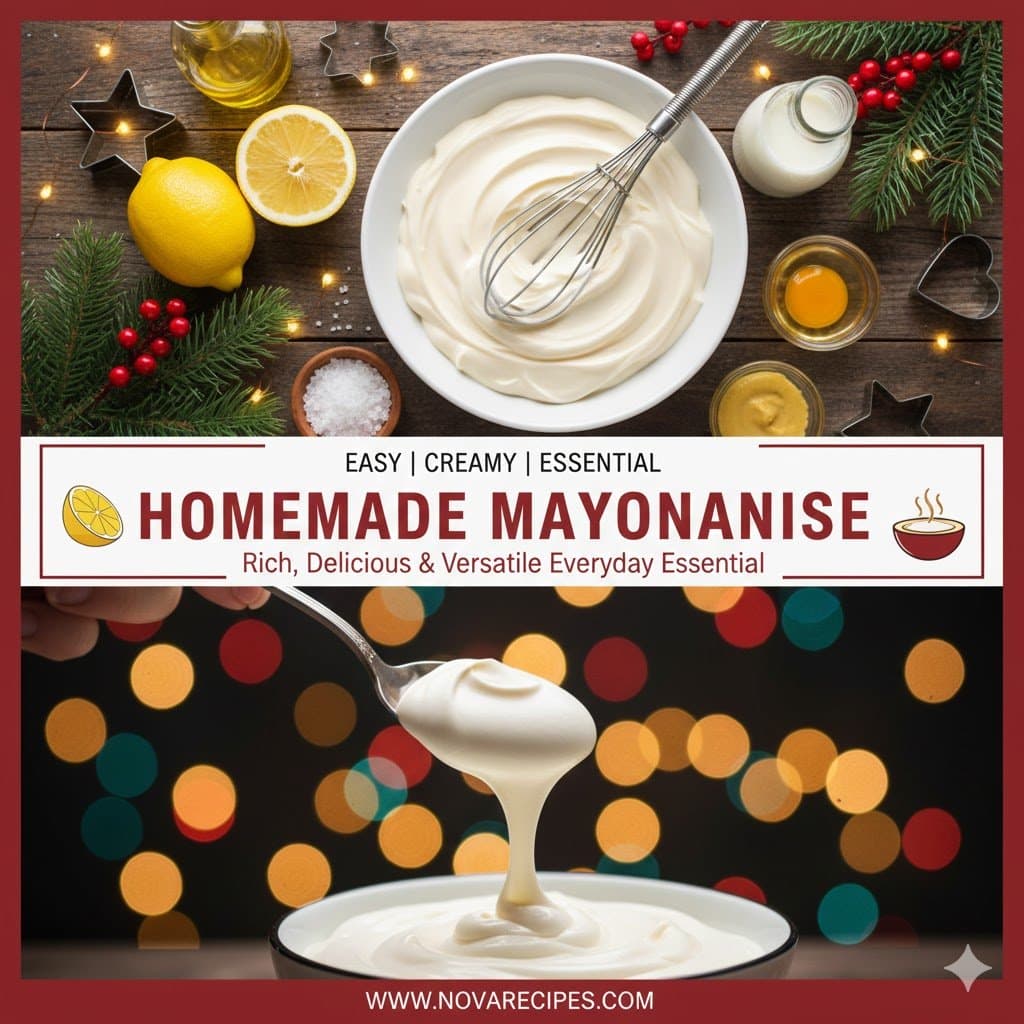
Start by whisking egg yolk and lemon juice together. Slowly add oil in a thin stream while whisking continuously. As the mixture thickens, you’ll see homemade mayonaise come together beautifully.
Common Mistakes and How to Fix Them
If your homemade mayonaise separates, don’t panic. Add a teaspoon of water or another egg yolk and whisk again. Going too fast with oil is the most common mistake, so slow and steady always wins.
Healthy Variations of Homemade Mayonaise
Egg-Free Version
You can make egg-free homemade mayonaise using milk or yogurt alternatives. This version is lighter and still creamy.
Garlic and Herb Mayonaise
Add crushed garlic or fresh herbs like parsley to boost flavor. These variations turn homemade mayonaise into a gourmet spread.
Storage and Shelf Life Tips
Homemade mayonaise should be stored in an airtight container in the refrigerator. It stays fresh for up to 4–5 days. Always use a clean spoon to avoid contamination.
Uses of Homemade Mayonaise in Everyday Meals
Homemade mayonaise is incredibly versatile:
- Sandwich spreads
- Salad dressings
- Burger toppings
- Dip for vegetables
- Base for sauces
Its smooth texture enhances almost any dish.
FAQs About Homemade Mayonaise
1. Is homemade mayonaise safe to eat?
Yes, when made with fresh ingredients and stored properly.
2. How long does homemade mayonaise last?
Usually 4–5 days in the refrigerator.
3. Can I make homemade mayonaise without eggs?
Yes, egg-free versions are available using milk or plant-based options.
4. Why did my homemade mayonaise turn runny?
Oil may have been added too quickly. Whisk slowly to fix it.
5. Can I flavor homemade mayonaise?
Absolutely! Garlic, herbs, or mild spices work well.
6. Is homemade mayonaise healthier than store-bought?
It often is, since it contains fewer additives and fresher ingredients.
Conclusion
Homemade mayonaise is a simple yet powerful way to upgrade your meals. With better flavor, fresher ingredients, and easy preparation, it’s no surprise many people are switching from store-bought versions. Once you try it, you’ll likely never go back.
For more culinary basics, you can explore helpful cooking resources like BBC Good Food for inspiration and tips.