Teriyaki Sauce Recipe (Asian Fusion Hook) —this is not your standard bottled glaze. As we welcome the Year of the Horse in Lunar New Year 2026, families gather to share meals that symbolize prosperity, unity, and joy. While tradition calls for dumplings and whole fish, the modern Asian kitchen thrives on fusion. Today, we honor the depth of Japanese culinary technique while introducing a subtle, contemporary twist that bridges cultures.
This isn’t just a recipe; it’s a respectful dialogue between the old and the new. Here is how to create the ultimate Teriyaki Sauce using an Asian Fusion hook, perfect for your Lunar New Year 2026 feast.
Why Teriyaki for Lunar New Year?
At first glance, Teriyaki—a cooking technique rooted in Japan—might seem out of place during the Lunar New Year. However, the underlying philosophy fits perfectly. The word teriyaki derives from teri (the luster or shine given by the sugar content) and yaki (the grilling or broiling method). This luster symbolizes a “bright future” and “golden fortune”—themes that resonate deeply during the New Year.
By utilizing a Teriyaki Sauce Recipe (Asian Fusion Hook) , we are not appropriating culture; we are celebrating the diaspora of Asian cuisine. We maintain the soul of the sauce—the balance of soy, mirin, and sake—while introducing aromatics that nod to the broader Asian continent.
The Hook: Yuzu, Honey, and Gochugaru
So, what is the “hook”? The hook is a respectful twist. Traditional teriyaki relies on white sugar for sweetness and sake for depth. In this 2026 edition, we are implementing a triple-threat fusion approach:
- Yuzu: A citrus fruit ubiquitous in Japanese and Korean cooking, replacing the standard lemon or rice vinegar for brightness.
- Honey: Used in place of white sugar to pay homage to the “sweetness” of the new year and provide a thicker, faster-glossing texture.
- Gochugaru (Korean chili flake): Used sparingly. It adds a faint warmth and red speckle, symbolizing luck and warding off evil spirits.
Important Note: We use Gochugaru as a nuance, not a dominant flavor. The integrity of the Japanese method remains intact.
The Science of the Glaze
Before we cook, we must understand the chemistry. A high-quality teriyaki sauce clings to food like velvet. Achieving this requires the caramelization of sugars. By using honey, we lower the risk of burning (compared to white sugar) while increasing the viscosity. The sake removes any unwanted gamey odors from proteins, and the mirin adds a complex sweetness that corn syrup simply cannot imitate.
Ingredients: The Fusion Pantry
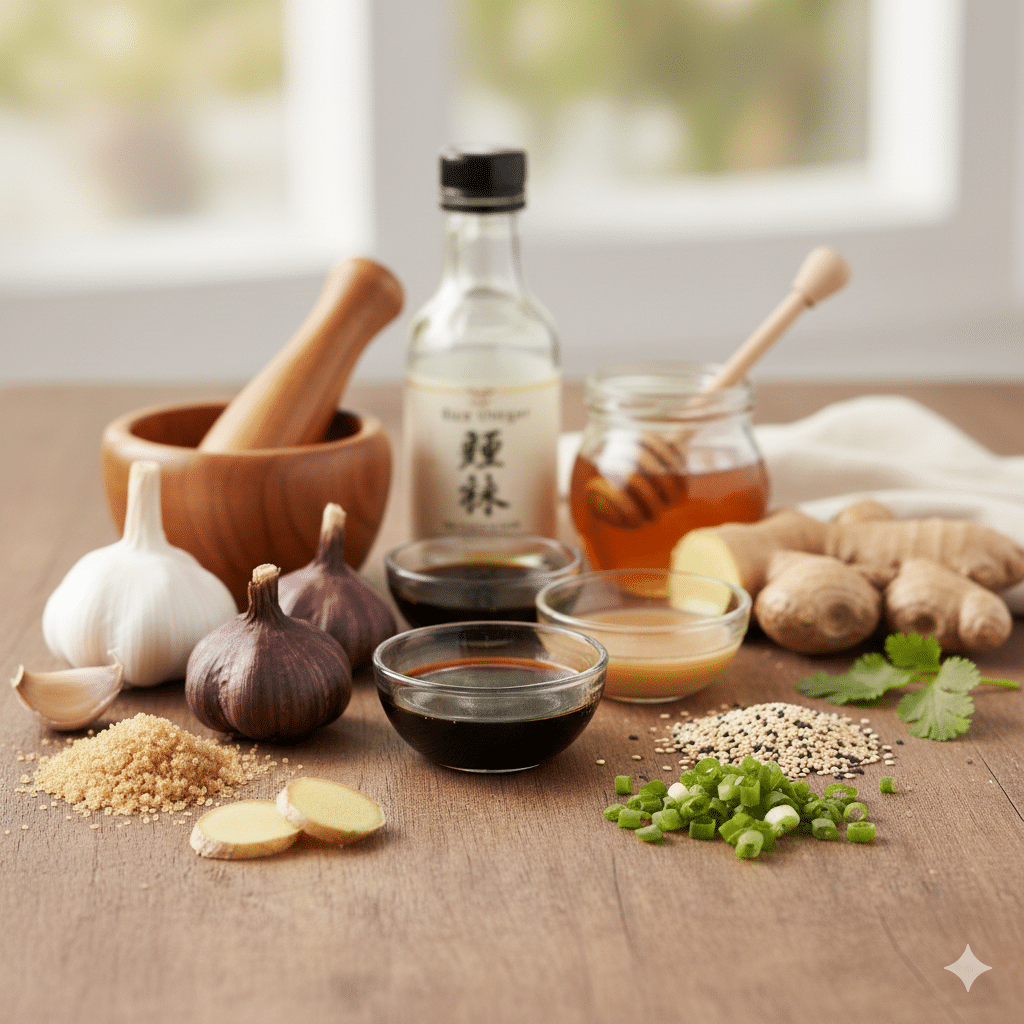
Yield: Approximately 1.5 cups
- 1/2 cup High-quality Japanese soy sauce (usukuchi or koikuchi; avoid “lite” versions)
- 1/2 cup Mirin
- 1/4 cup Sake
- 3 tablespoons Raw honey (the Asian Fusion Hook sweetener)
- 1 tablespoon Brown sugar (to assist crystallization)
- 2 cloves Garlic, minced
- 1 teaspoon Fresh ginger, grated
- 1 teaspoon Yuzu zest (or yuzu juice—bottled is acceptable)
- 1/2 teaspoon Gochugaru (Korean red pepper flakes)
- 1 tablespoon Cold water
- 1 teaspoon Cornstarch (optional, for a “restaurant-style” thick sauce)
Step-by-Step Method: Respecting the Craft
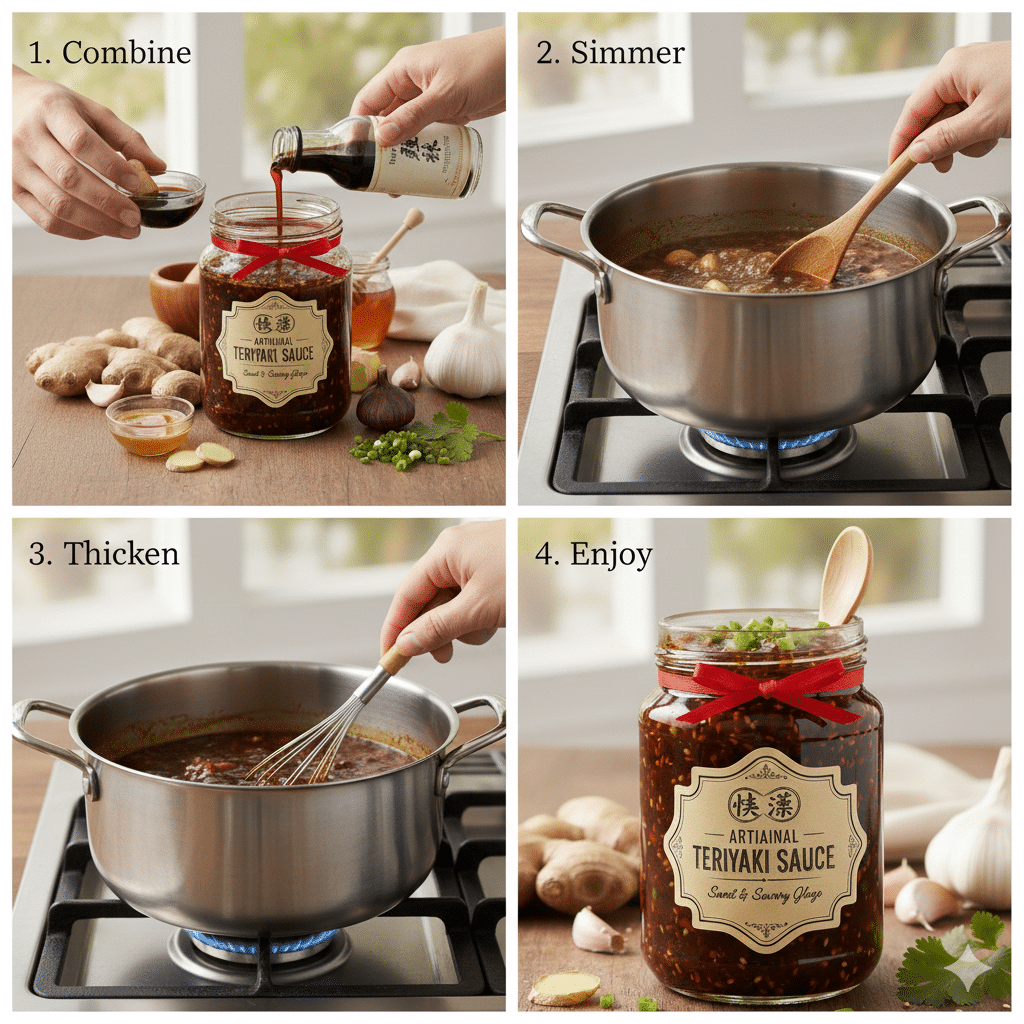
1. The Bloom
In a cold saucepan, combine the soy sauce, mirin, sake, honey, and brown sugar. Do not turn on the heat yet. Stir the ingredients gently to begin dissolving the honey. This prevents the sugars from scorching the moment they hit the heat.
2. The Infusion
Turn the burner to medium heat. Add the garlic, ginger, and the star of our Teriyaki Sauce Recipe (Asian Fusion Hook) : the yuzu zest and gochugaru. Stir continuously. You will notice the alcohol from the sake and mirin beginning to evaporate. This is crucial. If you taste the sauce now and get a sharp “boozy” hit, it isn’t ready.
3. The Simmer
Bring the sauce to a gentle simmer. Do not let it reach a roaring boil, as this will make the honey bitter. You are looking for the sauce to reduce by roughly one-third. This takes about 10–12 minutes.
4. The Slurry (Texture Decision)
If you prefer a glaze that wraps around your protein like a blanket, create a slurry with the cold water and cornstarch. Slowly drizzle this into the simmering sauce while whisking vigorously. The sauce will transform from watery to glossy within 30 seconds.
5. The Finish
Remove from heat. The sauce will thicken further as it cools. Strain the sauce if you prefer a smooth finish, or leave the aromatics in for a rustic, fusion aesthetic.
variations of Teriyaki sauce
1. Spicy Sriracha Teriyaki
Perfect for those who love a lingering heat with their sweet glaze.
- The Twist: Add 2 tablespoons of Sriracha and 1 teaspoon of red chili flakes to the base recipe.
- Best For: Spicy wings, beef stir-fry, or drizzling over roasted cauliflower.
2. Tropical Pineapple Teriyaki
A fruitier, brighter version that works beautifully for summer grilling.
- The Twist: Replace half of the water/liquid with 1/2 cup of unsweetened pineapple juice and add 1 teaspoon of lime juice.
- Best For: Grilled chicken skewers, Hawaiian-style burgers, or glazed salmon.
3. Honey Garlic & Toasted Sesame
A richer, more aromatic version with a deep nutty finish.
- The Twist: Double the garlic, swap the brown sugar for 1/4 cup of raw honey, and stir in 1 tablespoon of toasted sesame oil after the sauce has thickened.
- Best For: Tofu bowls, broccoli stir-fry, or as a dipping sauce for potstickers.
How to Use This Sauce for Lunar New Year 2026
The Hook in Action: Teriyaki Glazed Salmon
This is the ultimate centerpiece for your New Year table. Salmon is prized in Asian cultures for its rich color (red for happiness) and its tendency to swim upstream (perseverance).
- Pat dry your salmon fillets.
- Lightly salt the skin.
- Pan-sear skin-side down until ultra-crispy.
- Flip the fillet, reduce the heat, and spoon the Teriyaki Sauce Recipe (Asian Fusion Hook) over the fish repeatedly until it forms a thick, candied lacquer.
- Garnish with sesame seeds and fresh chives.
Vegetarian Option: Teriyaki Glazed Tofu & Bok Choy
Press firm tofu until dry. Cube and toss in potato starch. Pan-fry until golden on all sides. Toss in the warm teriyaki sauce. Separately, blanch bok choy and drizzle with a light touch of the sauce. The bitterness of the bok choy cuts through the sweetness of the fusion glaze perfectly.
History vs. Fusion
To truly respect the cuisine, one must know its roots. Teriyaki first appeared in Japan during the 17th century (Edo period). It was a method of preserving fish and vegetables in sweetened soy. When Japanese immigrants arrived in Hawaii and the West Coast of the United States, the recipe adapted. Pineapple juice was added to tenderize meat, creating what the West knows as “Teriyaki.”
Our Teriyaki Sauce Recipe (Asian Fusion Hook) for Lunar New Year 2026 is a continuation of that adaptation. We are not adding pineapple; we are adding yuzu. We are not adding cayenne; we are adding gochugaru. This is pan-Asian respect.
Troubleshooting Your Sauce
- Too Thin? You didn’t reduce it enough, or you skipped the cornstarch. Return to heat for 5 more minutes.
- Too Salty? Add a splash of water or dashi stock. The honey should balance this out.
- Burnt Flavor? Your heat was too high. Unfortunately, burnt sugar cannot be saved. Start again on medium-low heat.
- No Yuzu? Substitute with equal parts lemon juice and a tiny touch of mandarin orange zest.
Storage and Meal Prep
This sauce keeps exceptionally well.
- Fridge: Store in an airtight jar for up to 3 weeks.
- Freezer: Pour into ice cube trays. Once frozen, pop out a cube whenever you need a quick stir-fry sauce or marinade.
Why This Recipe Wins in 2026
The Year of the Horse (2026) is associated with energy, vitality, and speed. In the kitchen, this translates to food that is prepared with high heat and quick action—much like Teriyaki. This Teriyaki Sauce Recipe (Asian Fusion Hook) captures the “horse” spirit: it is strong, fast to cook, and leaves a lasting impression.
Final Thoughts: A Sauce for Gathering
Food is the great connector. As you set your table for Lunar New Year 2026, remember that the rules of cooking are not walls; they are foundations. By starting with the foundation of Japanese teriyaki and gently hooking it with Korean and citrus influences, you are telling a story of modern Asia.
You are respecting the elders who perfected the soy-to-mirin ratio while welcoming the younger generation back to the table with flavors that feel familiar yet exciting.
Gong Hey Fat Choy! May your 2026 be as rich, glossy, and bright as this homemade teriyaki glaze.