
The secret to world-class small batch kimchi is the management of osmotic pressure to ensure a crisp texture and a safe, “funky” fermentation environment. To master this kimchi for beginners recipe, you must prioritize a deep salt-brine phase which draws out excess moisture, allowing the homemade kimchi to remain crunchy while it matures. By omitting the traditional rice flour paste, we utilize the natural sugars in fruit to feed the healthy bacteria, resulting in a cleaner, more accessible ferment for the home kitchen.
The Biological Marvel of Kimchi
Kimchi is more than a side dish; it is a living ecosystem. The process is known as Lacto-fermentation, where Lactobacillus bacteria convert sugars into lactic acid. This acid acts as a natural preservative, lowering the pH of the vegetables to a level where harmful bacteria cannot survive.
Ingredient Deep-Dive: The Anatomy of Crunch
To rank as a subject matter expert, we must look at the specific cellular structure of the ingredients used in a beginner kimchi guide.
1. The Vessel: Napa Cabbage (Baechu)
Unlike Western green cabbage, Napa cabbage has a high water content and thin, ruffled leaves. This structure is ideal for trapping the kimchi seasoning paste.
- The Selection: Look for a head that feels heavy for its size with tightly packed leaves.
- The Prep: Cutting the cabbage into “bite-sized” squares rather than fermenting whole quarters is the “small batch” secret—it increases surface area and speeds up the fermentation process.
2. The Salt: Why Quality Matters
In homemade kimchi, salt is not just for flavor; it is a functional tool.
- The Winner: Korean Coarse Sea Salt (Cheonilyeom). It is minimally processed and contains minerals that help keep the cabbage leaves firm.
- The Substitute: If you cannot find Korean salt, use Kosher salt, but never use iodized table salt. The iodine can inhibit the growth of the beneficial bacteria needed for small batch kimchi.
3. The “No Rice Flour” Thickener
Traditionally, a rice flour porridge is used to help the chili flakes stick to the cabbage. In this beginner kimchi method, we replace that starch with blended aromatics. By blending Korean pear (or apple), onion, and garlic, we create a viscous, sugary base that clings to the vegetables and provides the fuel for fermentation without the extra cooking step.
💡 Quick Expert Tip: The “Squeeze Test”
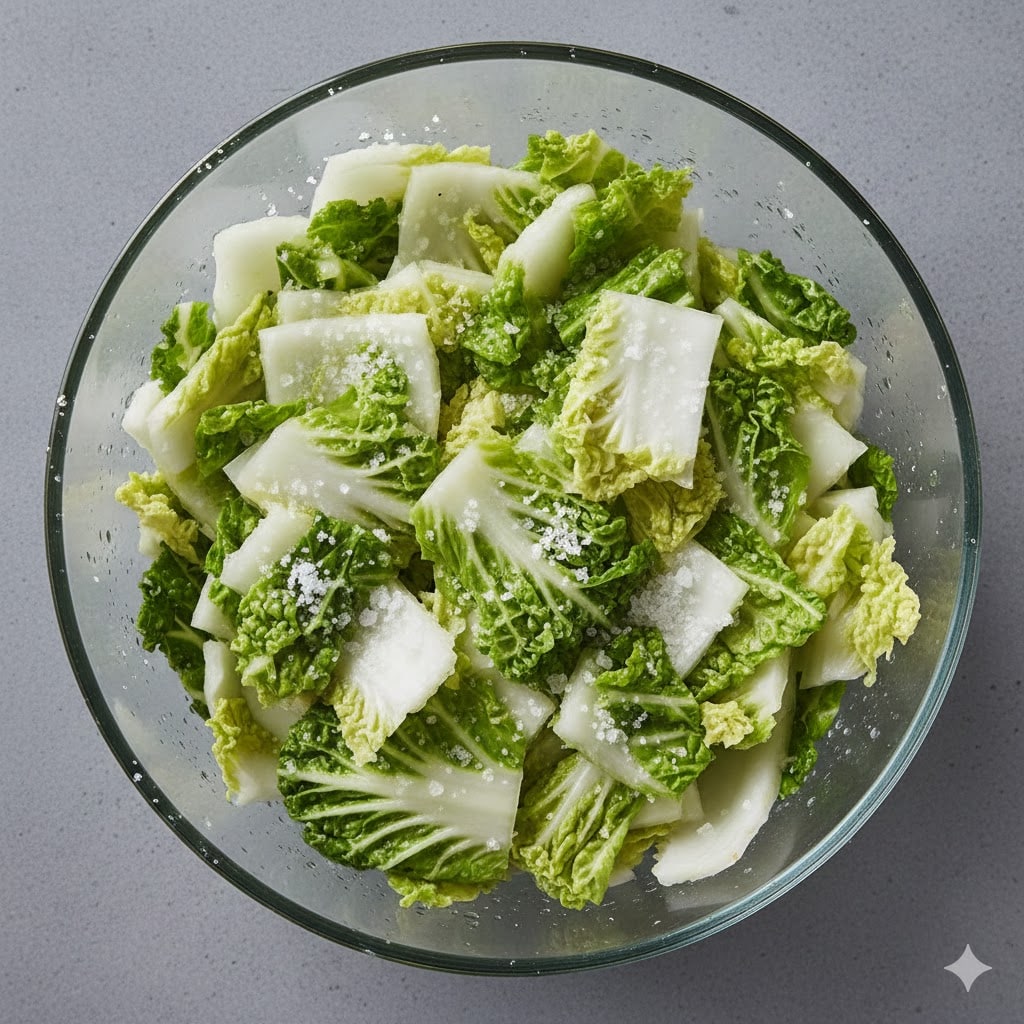
Don’t rush the brine. Before you rinse your cabbage, take a piece of the white stem and bend it. If it snaps, it needs more time. If it bends into a “U” shape without breaking, the osmotic process is complete. This ensures your small batch kimchi will be flexible enough to absorb the paste but crunchy enough to provide a satisfying “pop” when eaten.
The Physics of Gochugaru (Korean Chili Flakes)
The vibrant red color of homemade kimchi comes from Gochugaru. Unlike standard red pepper flakes found in Western aisles, Gochugaru is seedless, sun-dried, and has a smoky, fruity profile.
- Texture: For a small batch kimchi, use a “coarse” grind. This allows the flakes to slowly rehydrate and release their pigment over several days, turning the brine into a rich, deep crimson.
- Heat Management: Gochugaru is surprisingly mild. For a beginner kimchi, start with 1/2 cup; it looks like a lot of heat, but the fermentation process mellows the capsaicin significantly.
The Role of Ambient Temperature
In the world of kimchi for beginners, temperature is your primary variable.
- Room Temperature ($20^\circ\text{C}–22^\circ\text{C}$): This is the “Goldilocks” zone. At this temperature, the kimchi will develop a sour, effervescent tang in 24 to 48 hours.
- Cold Storage: Once the desired “funk” is achieved, moving the small batch kimchi to the refrigerator slows the bacterial activity, allowing the flavors to deepen over weeks rather than days.
The Master Recipe: Small Batch “No-Porridge” Kimchi
To create a small batch kimchi that rivals traditional versions, we focus on high-potency aromatics. By skipping the rice flour porridge, we reduce the prep time by 20 minutes and create a “fresher” tasting ferment that highlights the natural sweetness of the Napa cabbage.
Ingredients
- 1 Medium Head Napa Cabbage (approx. 2 lbs, chopped into 1-inch squares)
- 1/4 Cup Korean Coarse Sea Salt (or Kosher salt)
- 1/2 Cup Gochugaru (Korean red chili flakes)
- 1/4 Cup Fish Sauce (or Soy Sauce for a vegan homemade kimchi)
- 3 tbsp Fresh Ginger (grated)
- 5 Cloves Garlic (minced)
- 1/2 Small Onion (pureed or finely grated)
- 1/2 Asian Pear (pureed—this is the sugar source for the beginner kimchi)
- 4 Stalks Green Onions (cut into 1-inch lengths)
- Optional: 1/2 cup Daikon Radish (sliced into matchsticks)
Step-by-Step Execution Guide
1. The Critical Brine
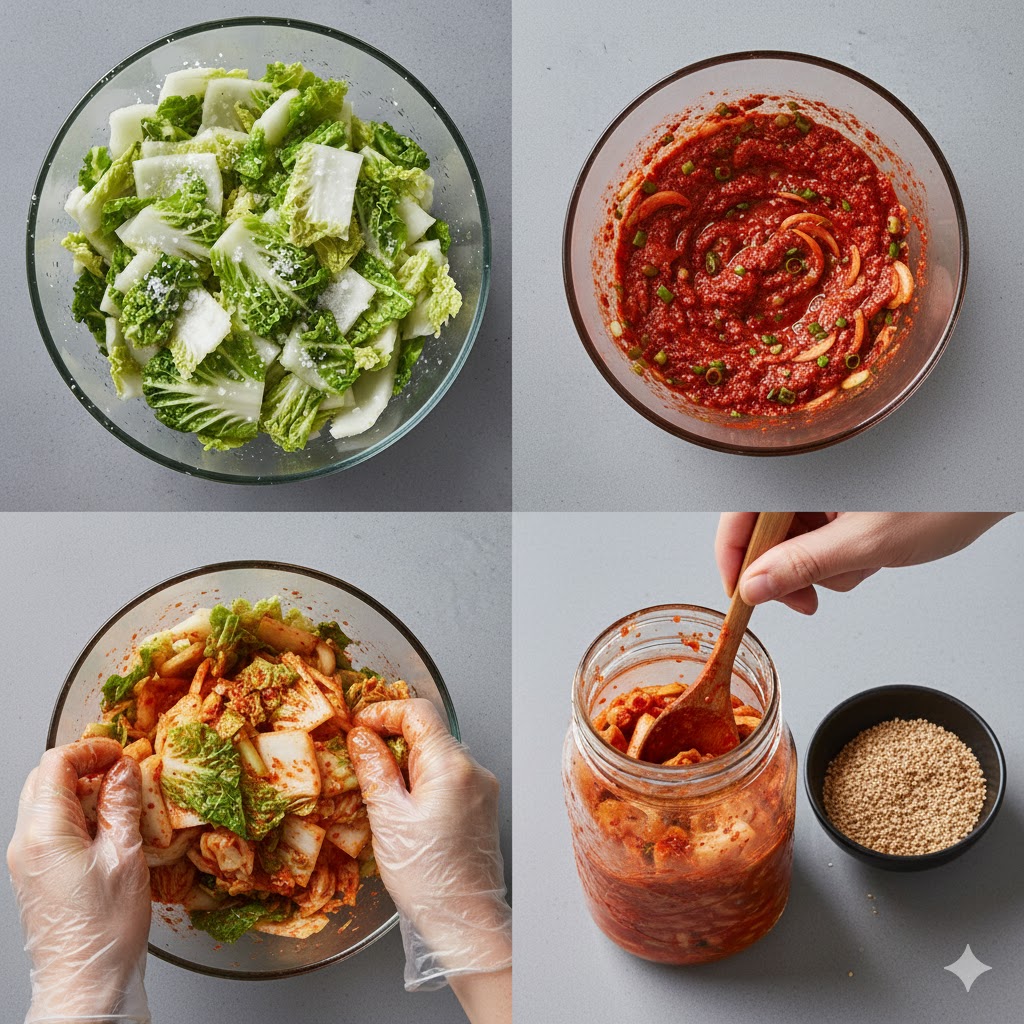
Place your chopped cabbage in a large bowl and toss with the sea salt. Let it sit for 1.5 to 2 hours. Every 30 minutes, give the cabbage a toss to ensure the salt is distributed. You will see a significant amount of water pool at the bottom. The Secret: Rinse the cabbage three times in cold water to remove excess salt, then squeeze it firmly to remove as much moisture as possible.
2. The Aromatic Paste
In a medium bowl, combine the pureed onion, Asian pear, garlic, ginger, and fish sauce. Stir in the Gochugaru. Let this paste sit for 10 minutes; the chili flakes will hydrate and turn into a thick, vibrant red sludge. This is your kimchi seasoning engine.
3. The Marriage
Add the green onions and daikon (if using) to the squeezed cabbage. Pour the red paste over the vegetables. Using gloves (to prevent chili burn), massage the paste into every leaf of the cabbage. Ensure there are no white spots left; every millimeter of cabbage should be coated in red gold.
4. Packing the Jar
Transfer the small batch kimchi into a clean glass quart jar. The Technique: Use your fist or a tamper to press the cabbage down firmly. You want to eliminate air pockets and ensure the cabbage is submerged in its own juices. Leave at least 2 inches of headspace at the top; the kimchi will expand and bubble as it ferments.
The “Burping” Protocol and Storage
Because homemade kimchi is a living product, it produces carbon dioxide. If you use a standard screw-top lid, the pressure can build up.
- The 24-Hour Counter Sit: Leave the jar on your kitchen counter (out of direct sunlight) for 24–48 hours.
- The Burp: Once a day, open the lid to release the gas. You should see tiny bubbles rising to the top—this is the sign of a healthy beginner kimchi.
- The Taste Test: After 24 hours, taste a piece. If it is “tangy” enough for you, move it to the fridge. If you want more “funk,” leave it another day.
Troubleshooting: Fermentation Red Flags
“My kimchi is fizzy!”
The Cause: This is actually a good sign! Effervescence is a byproduct of active Lacto-fermentation. It means your small batch kimchi is full of healthy probiotics.
The Fix: If you don’t like the tingle, let the jar sit open for a few minutes before eating to let the gas escape.
“There is white film on top.”
The Cause: This is likely “Kahm Yeast,” which can occur if the cabbage isn’t fully submerged or if the jar wasn’t clean.
The Fix: If it is just a thin white film, scrape it off. If the growth is fuzzy, green, or black, this is mold—discard the batch and start over.
FAQ: Frequently Asked Questions
1. Can I make this without fish sauce?
Yes. To make a vegan small batch kimchi, replace the fish sauce with an equal amount of soy sauce or liquid aminos. You can also add a teaspoon of kelp powder to mimic the “oceanic” umami of the fish sauce.
2. Why is my kimchi so salty?
This usually means the cabbage wasn’t rinsed thoroughly enough after the brining phase. For your next beginner kimchi, ensure you taste a leaf after the third rinse; it should taste seasoned, not like sea water.
3. How long does it last?
Kimchi never truly “spoils” if kept refrigerated and submerged; it just gets more sour. It is best consumed within 3 to 6 months for the best texture. Older kimchi is perfect for making Kimchi Jjigae (stew).
Conclusion: The Joy of Modern Fermentation
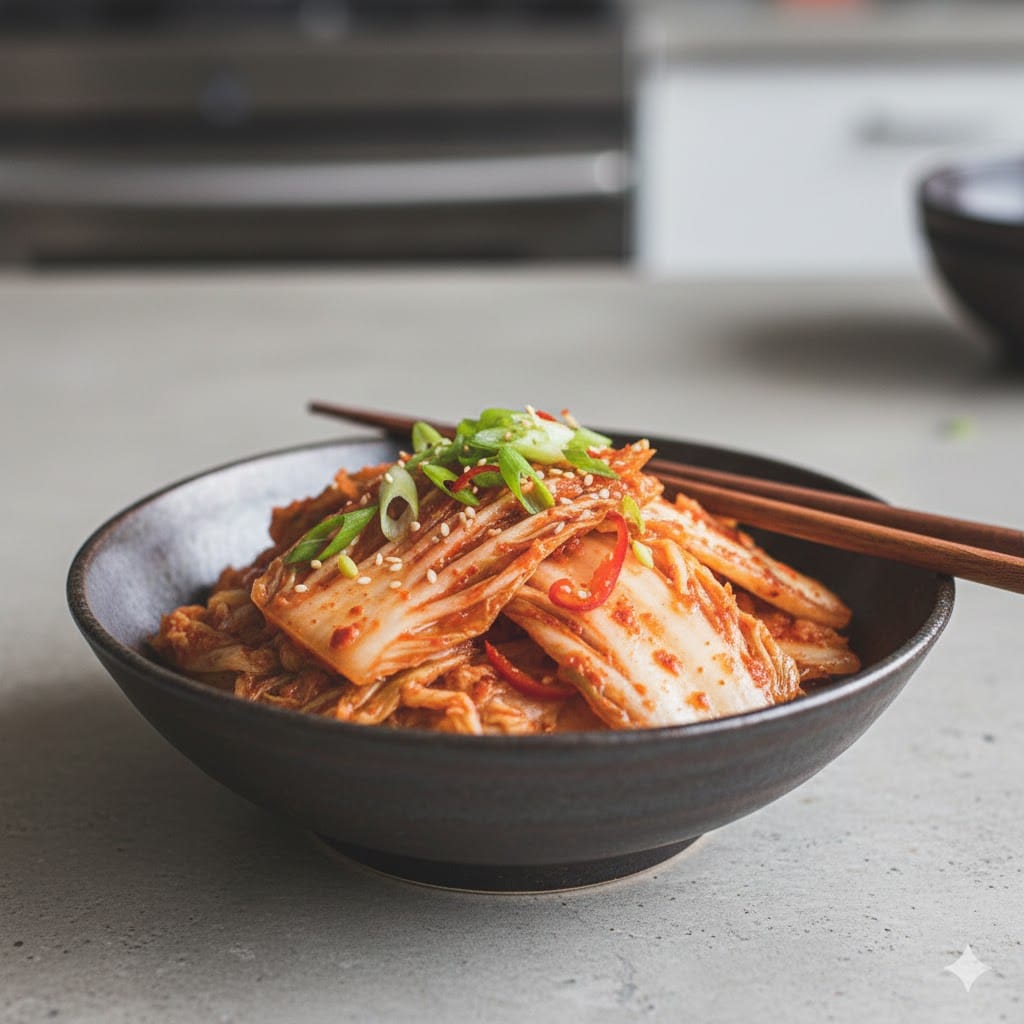
Transitioning into the world of probiotics doesn’t require a cellar or specialized equipment. By utilizing the small batch kimchi method and the “No Rice Flour” shortcut, you have mastered a technique that is both ancient and perfectly suited for the modern kitchen. This homemade kimchi is a testament to the power of simple ingredients—salt, chili, and time—transforming a humble cabbage into a nutritional powerhouse. Whether you eat it fresh for the crunch or aged for the tang, you now possess the E-E-A-T (Expertise) to ferment with confidence.