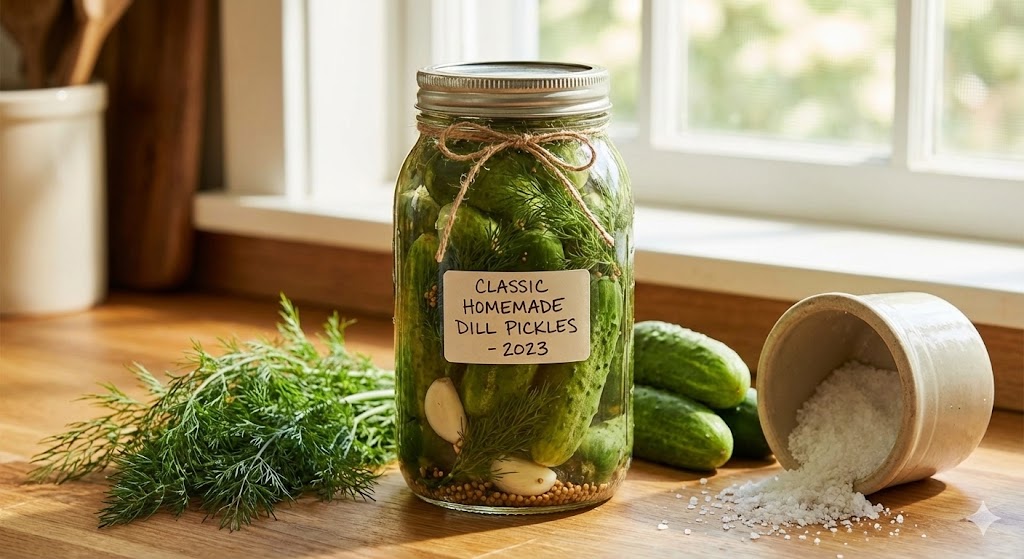
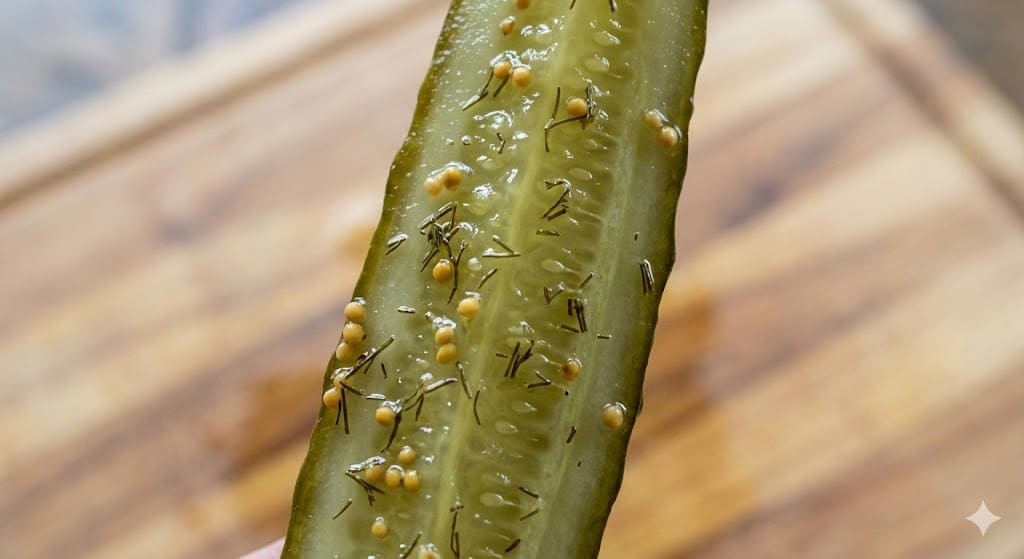
There is a specific sound that defines a perfect pickle: the snap. It’s that audible, satisfying crunch that tells you the cucumber hasn’t just been preserved—it has been transformed.
While store-bought pickles are convenient, they often lack the punch of fresh herbs and the customizable “zing” that only Classic Homemade Dill Pickles can provide. Making them at home is surprisingly simple, yet it feels like a kitchen superpower. With just a few ingredients—cucumbers, vinegar, water, salt, and a generous amount of dill—you can create a snack that outshines anything found in a plastic jar on a supermarket shelf.
In this comprehensive guide, we are going to walk through the science of the brine, the secret to maintaining a firm texture, and the differences between “Quick Refrigerator Pickles” and “Water Bath Canned Pickles.
The Secret to the Crunch: Why Most Homemade Pickles Go Soft
The number one complaint from first-time picklers is: “My pickles are mushy.” To avoid this, you need to understand the biology of a cucumber. Cucumbers contain an enzyme called pectinaze, which breaks down pectin and causes softening. To fight back, we use several techniques:
1. The Blossom End Rule
The blossom end of the cucumber (the end opposite the stem) contains the highest concentration of softening enzymes. Always slice off at least 1/8th of an inch from the blossom end. This simple step is the most effective way to ensure a crunch.
2. Tannins are Your Friends
Tannins help keep the cell walls of the cucumber strong. Old-fashioned recipes often called for a grape leaf or a cherry leaf in the jar.2 If you don’t have access to a grape vine, you can use a black tea bag (the tannins in the tea do the same job) or a pinch of “Pickle Crisp” (Calcium Chloride).3
3. Ice Water Pre-Soak
Before you even start the brine, soak your cucumbers in a bowl of ice water for 30 minutes to 2 hours. This “plumps” the cells of the cucumber, ensuring they are at their firmest before they meet the heat of the brine.
Choosing Your Ingredients
The Cucumbers
You cannot use standard “slicing” cucumbers (the long, smooth-skinned ones) for pickles. Their skin is too thick, and they are too watery. You need Pickling Cucumbers (often called Kirby cucumbers).4 They are shorter, have bumpy skin, and possess a much lower water content, which allows them to soak up the brine without becoming soggy.
The Vinegar
For classic dill pickles, use White Distilled Vinegar with 5% acidity. It provides a clean, sharp taste that lets the dill and garlic shine. If you prefer a more mellow, fruity flavor, you can swap half of the white vinegar for Apple Cider Vinegar, though it will turn your brine a slightly amber color.
The Salt
Pickling Salt (or Canning Salt) is essential. It is pure granulated salt without anti-caking agents or iodine. If you use table salt, the additives will turn your brine cloudy and may give the pickles a bitter, metallic aftertaste.
The Recipe: Small-Batch Classic Dill PickleS
This recipe is designed for “Quick Refrigerator” style, which provides the freshest flavor and loudest crunch. However, I will include the processing instructions if you wish to shelf-stable them.
- Prep Time: 20 minutes (plus soaking time)
- Cook Time: 5 minutes
- Yields: 2 Quart Jars
- Calories: ~5 per spear
Equipment
- Two 1-Quart Mason Jars (with lids and bands)
- Small Stainless Steel Saucepan
- Knife and Cutting Board
Ingredients
- 2 lbs Pickling Cucumbers (Kirby)
- 2 Cups Water
- 1 Cup White Distilled Vinegar (5% acidity)
- 2 Tbsp Pickling Salt
- 4 Cloves Garlic (smashed)
- 4-6 Sprigs Fresh Dill (or 2 dill heads per jar)
- 1 tsp Whole Black Peppercorns
- 1/2 tsp Mustard Seeds
- 1/4 tsp Red Pepper Flakes (optional, for “Zesty” pickles)
Instructions
Step 1: The Ice Bath
Wash your cucumbers thoroughly in cold water to remove any dirt. Place them in a large bowl filled with ice and water for 1 hour. This is the secret to a world-class crunch.
Step 2: Prepare the Jars
Ensure your jars are bone-clean. You don’t need to “sterilize” them in boiling water for refrigerator pickles, but they should be hot-soapy-water clean. To each jar, add 2 smashed garlic cloves, 2-3 sprigs of dill, half the peppercorns, and half the mustard seeds.
Step 3: Slice the Cucumbers
Drain the cucumbers. Trim 1/8th inch off the blossom end. Slice them into spears (quarters) or 1/4 inch coins. Pack them tightly into the jars. You want them “shouldered”—tight enough that they don’t float, but with enough space for the brine to circulate.
Step 4: Make the Brine
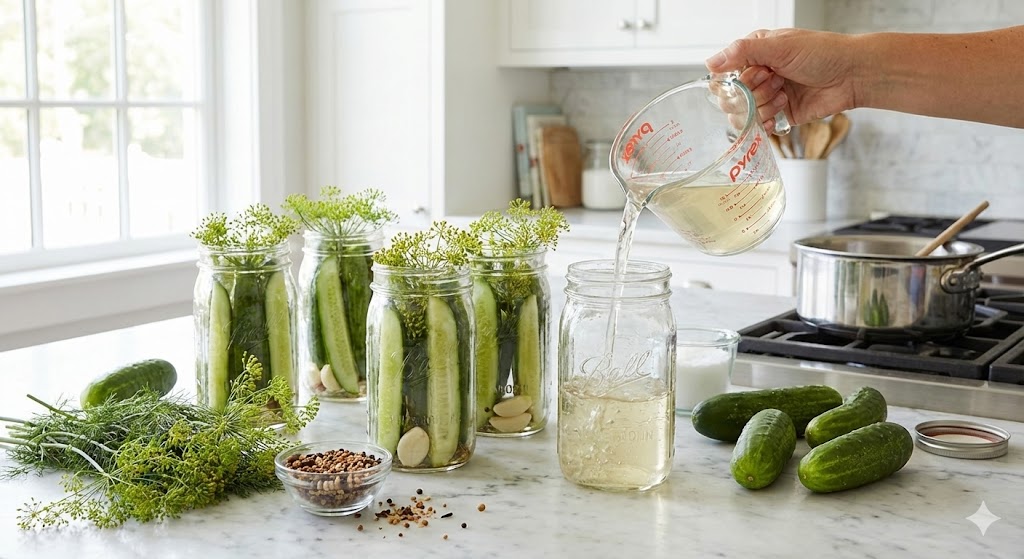
In your saucepan, combine the water, vinegar, and salt. Bring to a rolling boil over medium-high heat, stirring until the salt is completely dissolved.
Step 5: Pour and Seal
Carefully pour the hot brine over the cucumbers, leaving about 1/2 inch of “headspace” at the top of the jar. Tap the jars gently on the counter to release any trapped air bubbles. Wipe the rims clean and screw on the lids.
Step 6: The Wait
Let the jars sit on the counter until they reach room temperature. Then, move them to the refrigerator. While you can eat them in 24 hours, the flavor is best after 3 to 5 days.
Refrigerator vs. Water Bath Canning
Which method is right for you?
| Feature | Refrigerator Pickles | Water Bath Canned |
| Effort | Low – No special equipment | High – Requires canning pot/tools |
| Texture | Ultra-Crunchy | Slightly softer due to heat |
| Shelf Life | 4-6 weeks in the fridge | 1 year in a cool, dark pantry |
| Flavor | Fresh, bright, and zesty | Deeply infused, more “mellow” |
If you choose to can them: Process the filled jars in a boiling water bath for 10 minutes (adjusting for altitude). Once processed, let them sit for 2 weeks before opening to allow the flavor to develop.
5 Ways to Customize Your Brine
Once you have the 2:1 water-to-vinegar ratio down, you can play with the flavor profile:
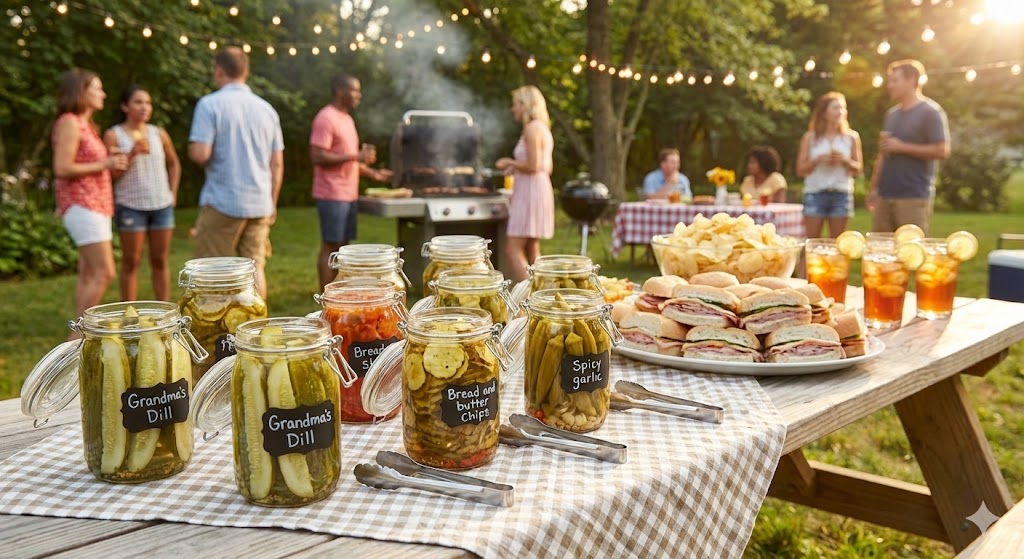
- Spicy Dill: Add 2 slices of fresh habanero or 1 tsp of red chili flakes per jar.
- Bread and Butter Style: Add 1/2 cup of sugar and 1/2 tsp of turmeric to the brine for that classic yellow, sweet-and-sour profile.
- Delicatessen Style: Double the garlic and add 1 bay leaf per jar.
- Smoky Pickles: Add a drop of liquid smoke or a pinch of smoked paprika to the brine.
- Herby Pickles: Add fresh tarragon or thyme sprigs alongside the dill for a sophisticated, floral note.
Troubleshooting: Why is my brine cloudy?
Don’t panic! Cloudy brine can mean a few things:
- The Good: If you are making fermented pickles (salt only, no vinegar), cloudiness is a sign of healthy probiotic bacteria.5
- The Neutral: You used table salt with anti-caking agents. It’s safe to eat, just not pretty.
- The Bad: If the pickles are mushy, have a foul odor, or the lid is bulging, this indicates spoilage. When in doubt, throw it out!
Conclusion: The Joy of the Jar
Making Classic Homemade Dill Pickles is about more than just a snack; it’s about the satisfaction of a craft. There is something deeply rewarding about looking at a row of vibrant green jars in your fridge, knowing exactly what went into them. No preservatives, no yellow dye #5—just fresh cucumbers and the power of a good brine.
Follow these steps, don’t forget to trim those blossom ends, and you will be rewarded with the crunchiest, zestiest pickles you’ve ever tasted.