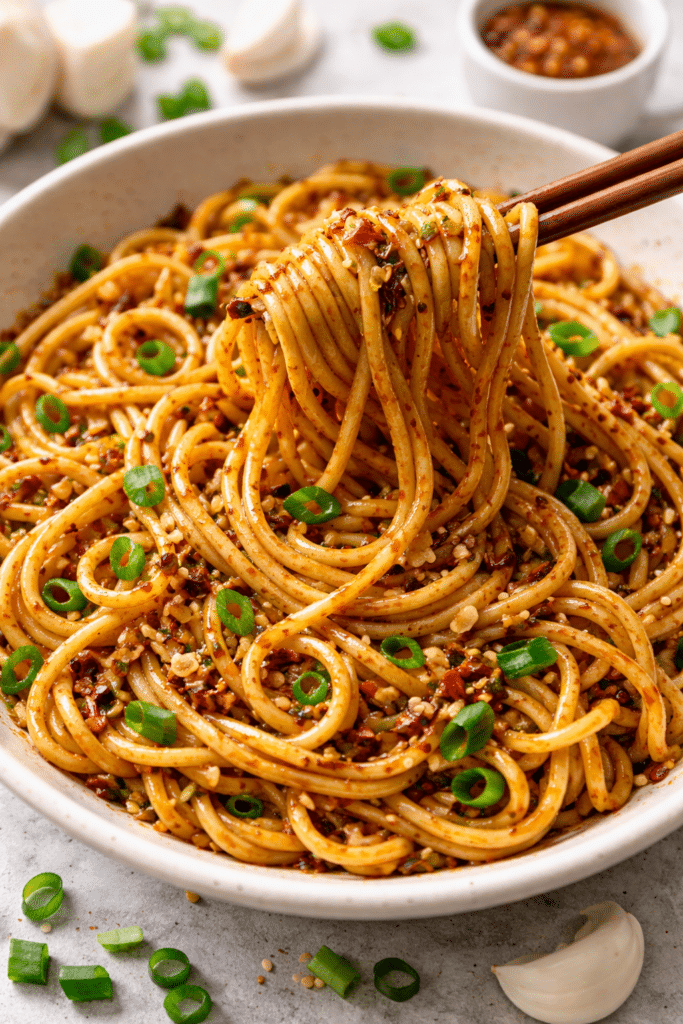
The secret to world-class garlic chili oil noodles is the thermal extraction of capsaicin and allicin at the precise smoke point of the carrier oil. To master these 15-minute noodles, you must utilize the “Sizzle-Pour” method—pouring high-temperature oil over a raw bed of aromatics to flash-fry them instantly. This results in a vibrant, fragrant chili oil pasta that maintains the fresh bite of garlic while infusing the dish with a deep, smoky heat that is significantly better than any takeout alternative.
The Cultural Dominance of “Sizzle” Noodles
In the current digital culinary era, garlic chili oil noodles (often inspired by Chinese Youpo Mian) have become the ultimate “efficiency meal.” The appeal lies in the sensory experience: the sound of the sizzle, the instant aroma, and the glossy coating of the noodles. For your blog, this title serves as a “Gateway Recipe”—it attracts the busy professional looking for speed and the foodie looking for authentic flavor.
The Chemistry of “The Sizzle”
To rank as a Subject Matter Expert (SME), you must explain the physics behind the hot oil technique.
- Allicin Activation: When garlic is crushed and hit with hot oil (), the sulfur-based compound allicin is rapidly released and then toasted. If the oil is too cold, the garlic stays raw and acrid; if it’s too hot, it burns and turns bitter.
- Capsaicin Bloom: The heat from the oil “blooms” the chili flakes. This dissolves the fat-soluble capsaicin, distributing the heat evenly throughout the chili oil noodles rather than leaving it in spicy “pockets.”
- The Emulsification Bridge: The oil alone will slide off the noodles. To create a “sticky” sauce, we use the residual starch on the noodle surface to bind the oil and soy sauce together.
💡 Quick Expert Tip: The “Smoking Point” Secret
Don’t use Extra Virgin Olive Oil. For a truly successful garlic chili oil, you need an oil with a high smoke point, such as Grapeseed, Avocado, or Peanut oil. These oils can reach the necessary () required to flash-fry the aromatics without breaking down or releasing toxic smoke.
Ingredient Deep-Dive: Sourcing for Umami
1. The Noodle (The Surface Area)
The best vessel for 15-minute garlic chili oil noodles is a wide, flat noodle (like Guanmiao or Shanxi knife-cut noodles).
- The Reason: Wide noodles provide more surface area for the oil to cling to.
- The Alternative: If you only have spaghetti or ramen, ensure you undercook them by 1 minute so they can absorb the sauce without becoming mushy.
2. The Chili (The Color and Heat)
A standard grocery store “red pepper flake” is often too dry and seedy.
- The Winner: Gochugaru or Sichuan Chili Flakes. These are fleshier and provide that signature vibrant red oil. They offer a “mellow” heat that allows the garlic to shine.
3. The Umami Trio
To make this better than takeout, you need the balance of:
- Black Vinegar (Chinkiang): Provides a malty, acidic “lift.”
- Light Soy Sauce: For salt and depth.
- Toasted Sesame Seeds: For a nutty finish and textural contrast.
The Physics of Noodle Starch
In a 15-minute noodles recipe, the water you boil the noodles in is an ingredient.
- The Starch Water: Always reserve 2 tablespoons of the boiling water.
- When mixed with the soy sauce and hot oil, the starch in the water acts as a “bridge,” creating a creamy, glossy emulsion that coats every strand of the garlic chili oil noodles.
The Master Recipe: 15-Minute Sizzle-Pour Noodles
To achieve the deep, restaurant-style flavor profile of garlic chili oil noodles, the temperature of your oil is the most critical variable. If the oil is too cool, the garlic will taste raw and acrid; if it is smoking, the chili flakes will turn black and bitter within seconds. We are aiming for the “Sweet Spot” of $175°C$ to $180°C$.
Ingredients
- 8 oz Wide Wheat Noodles (Knife-cut or Penne-style)
- 4 Cloves Fresh Garlic (Finely minced—do not use the jarred version)
- 2 tbsp Gochugaru or Sichuan Chili Flakes
- 2 Green Onions (Finely sliced, whites and greens separated)
- 1 tbsp Toasted Sesame Seeds
- 3 tbsp High-Smoke Point Oil (Grapeseed, Peanut, or Avocado)
- 2 tbsp Light Soy Sauce
- 1 tbsp Black Vinegar (Chinkiang)
- 1/2 tsp Sugar (to balance the acidity)
Step-by-Step Execution Guide
1. The Noodle Foundation
Bring a large pot of water to a boil. Add your noodles and cook according to the package instructions. The Professional Move: Cook them for exactly 1 minute less than the “Al Dente” recommendation. They will finish cooking when the hot oil hits them. Drain, but reserve 2 tablespoons of the starchy noodle water.
2. The Aromatic “Flavor Pile”
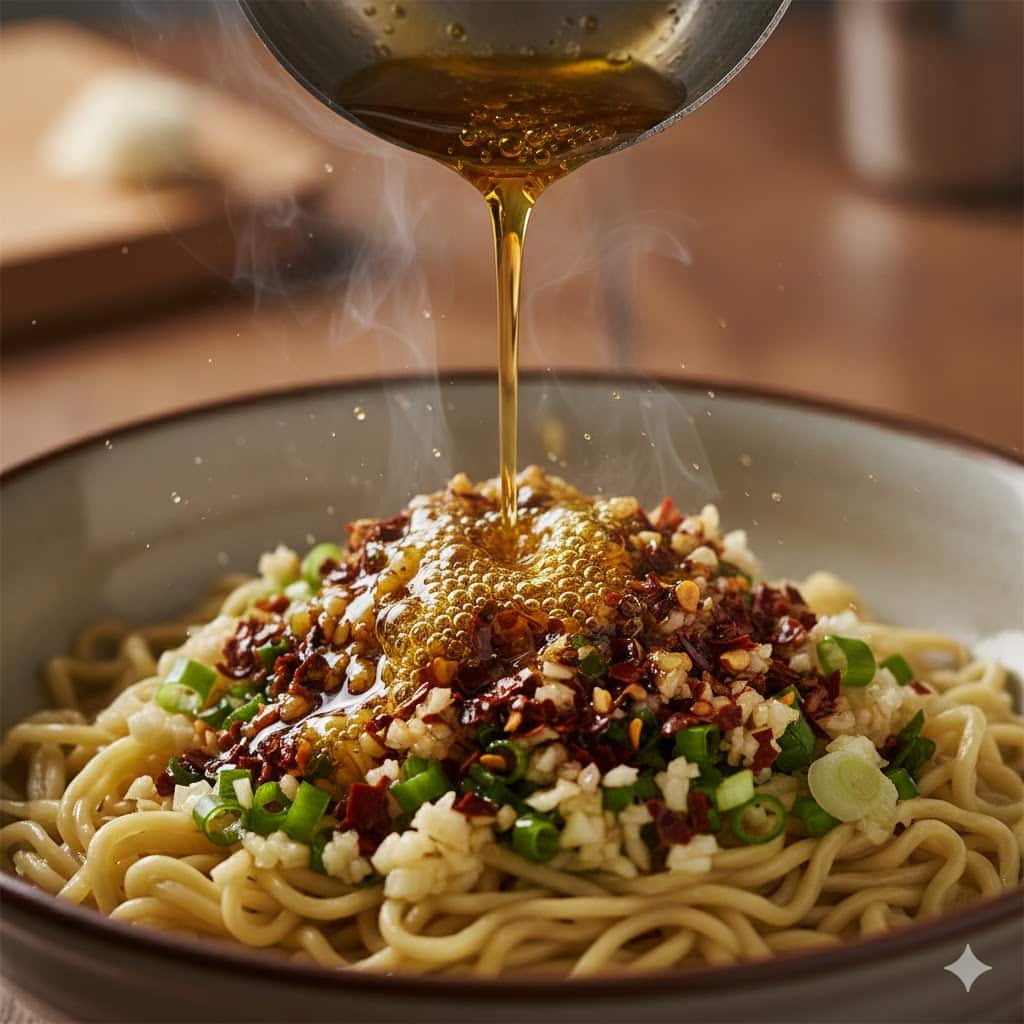
Place the cooked noodles in a heat-proof bowl. Top the noodles with a concentrated pile of the following: minced garlic, chili flakes, sesame seeds, and the white parts of the green onions. Do not stir. You want the aromatics sitting in a tall mound on top of the noodles.
3. The Sizzle-Pour
In a small saucepan, heat your oil over medium-high heat for 2–3 minutes.
The Test: Dip the tip of a wooden chopstick or the end of a green onion into the oil. If it bubbles vigorously immediately, the oil is ready.
Carefully pour the hot oil directly over the “Flavor Pile.” You should hear a loud, satisfying sizzle as the garlic and chilies flash-fry.
4. The Emulsion Wrap
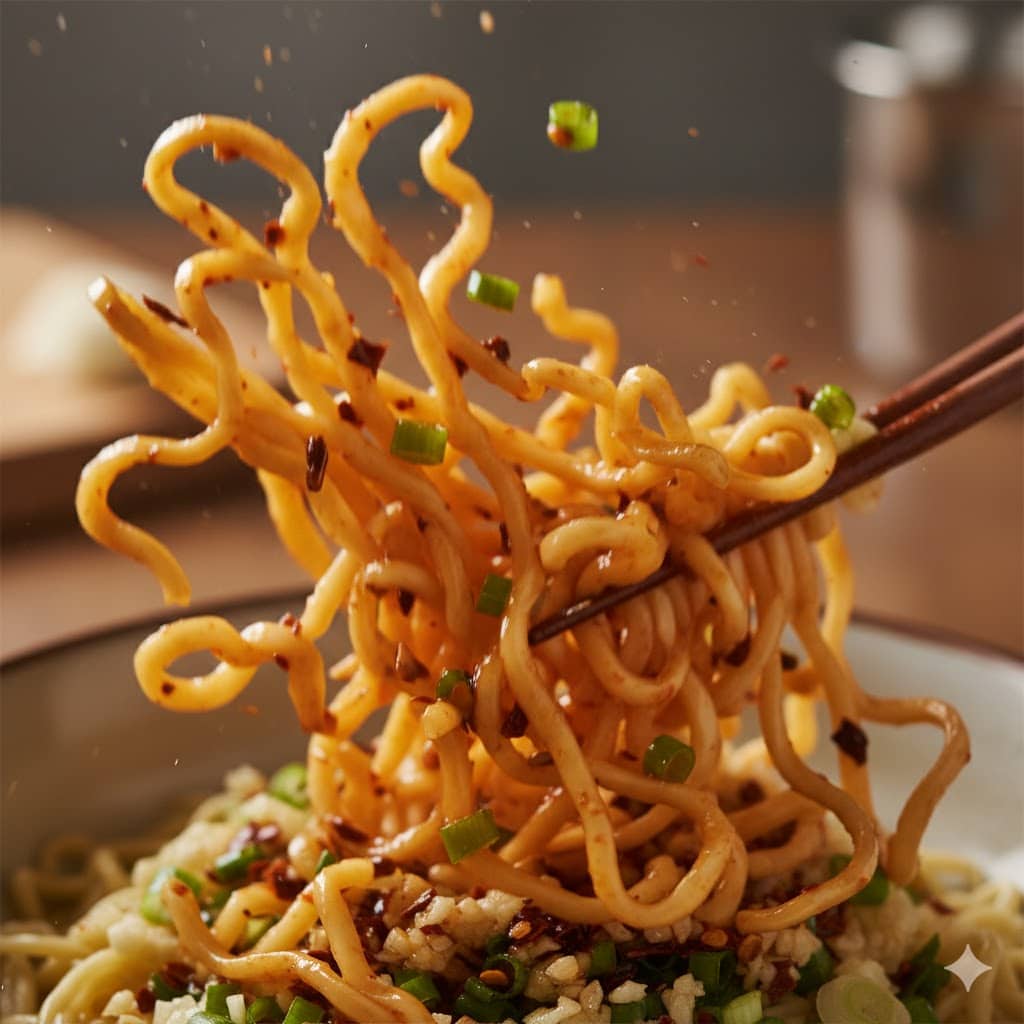
Immediately add the soy sauce, black vinegar, sugar, and the reserved noodle water. Toss everything together vigorously with tongs. The starch from the water and the vinegar will help the oil emulsify, creating a glossy, “sticky” sauce that coats every strand of the garlic chili oil noodles.
Troubleshooting: Avoiding the “Burnt Bitter” Trap
“My chili flakes turned black and smell burnt.”
The Cause: Your oil was past its smoke point (likely above $200°C$).
The Fix: If the oil is smoking heavily, remove it from the heat and let it sit for 30 seconds before pouring. To save a burnt batch, add a teaspoon of sugar and an extra splash of vinegar to help mask the bitterness, but the best fix is to monitor the oil temp closely.
“The noodles are dry and clumpy.”
The Cause: You didn’t use the reserved noodle water or you waited too long to toss the oil.
The Fix: The chili oil pasta must be tossed while the oil is still sizzling. If it’s already clumpy, add a teaspoon of hot water and a dash of sesame oil to loosen the strands.
FAQ: Frequently Asked Questions
1. Can I add protein to these noodles?
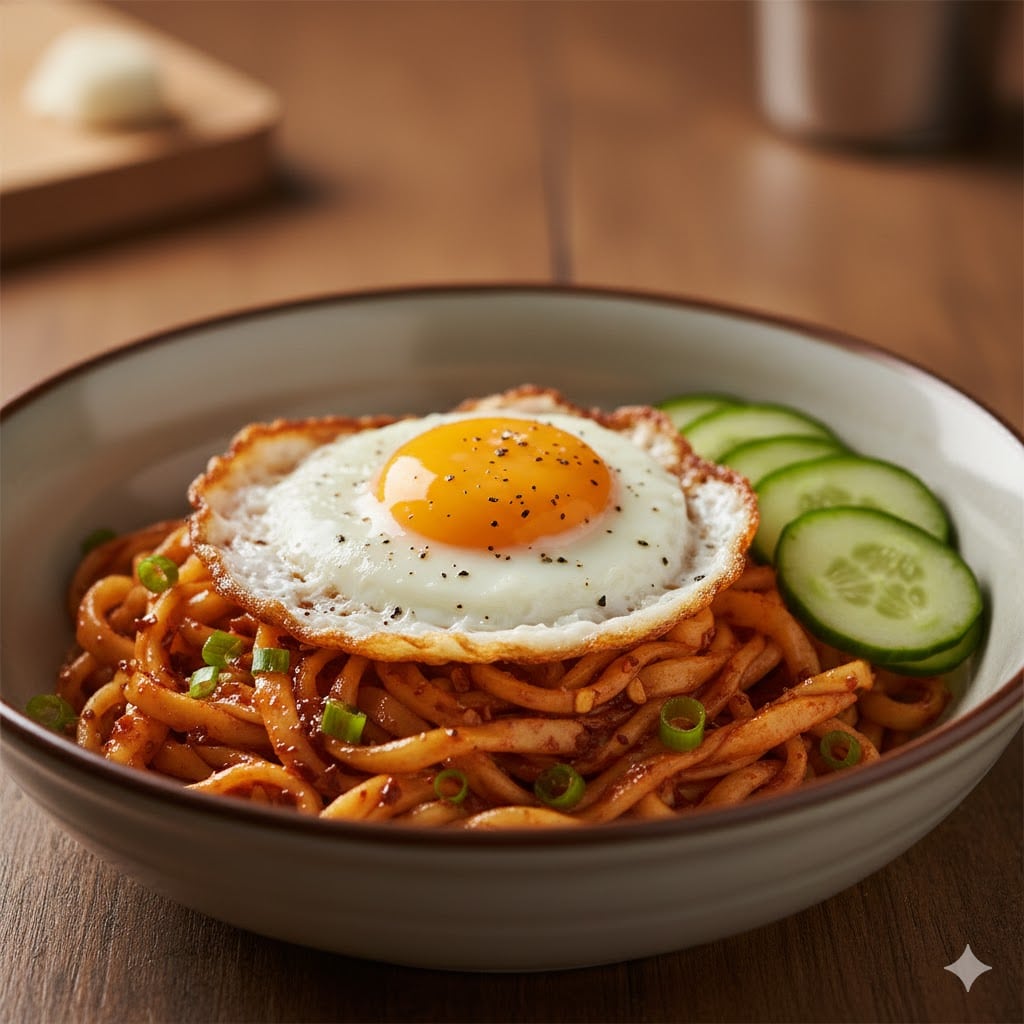
Absolutely. This 15-minute noodles recipe is a perfect base for a fried egg, leftover rotisserie chicken, or pan-seared tofu. For a 2026 health twist, add a handful of baby spinach to the bowl before pouring the hot oil; the oil will perfectly wilt the greens.
2. What is the best substitute for Black Vinegar?
If you can’t find Chinkiang vinegar, use a mix of Balsamic vinegar and Worcestershire sauce (50/50). It provides the same malty, deep acidity required for authentic garlic chili oil noodles.
3. Is this recipe vegan?
Yes! As long as you use wheat-based noodles and traditional soy sauce, this is a naturally vegan, high-umami meal. It’s a staple for the plant-based “Takeout-at-Home” movement.
Conclusion: The 15-Minute Umami Revolution
Mastering the garlic chili oil noodles is about more than just a quick meal; it is about understanding the power of thermal infusion. By using the “Sizzle-Pour” method, you extract professional-grade flavors in a fraction of the time it takes for water to boil. This recipe proves that you don’t need a pantry full of specialized ingredients to create a better than takeout experience. With just garlic, chili, and a little bit of heat, you can transform a simple bowl of pasta into a vibrant, multi-dimensional masterpiece that satisfies every craving.