

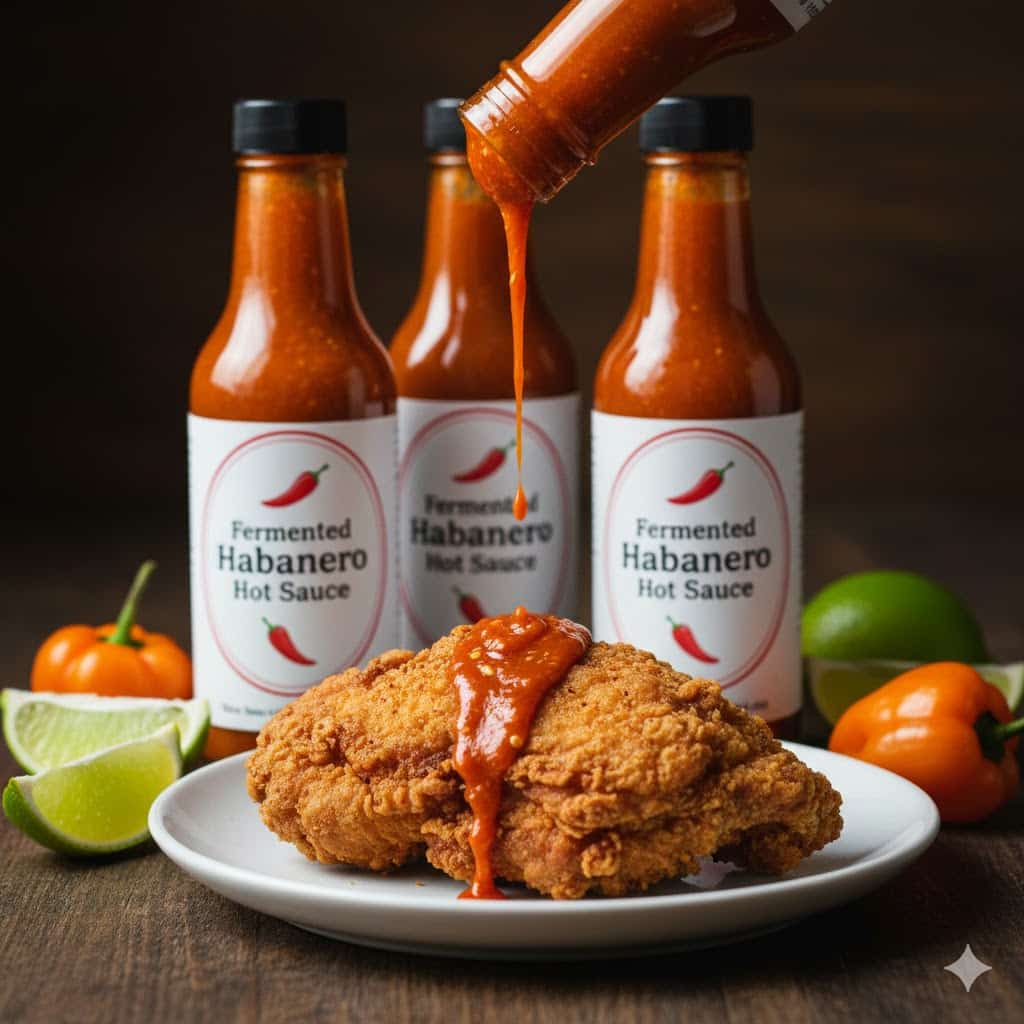
There is a profound difference between a hot sauce that simply burns and a hot sauce that tells a story. If you look at the most iconic hot sauces in the world—from the classic Tabasco aged in white oak barrels to the trendy artisan bottles found in high-end specialty markets—they all share one fundamental secret: fermentation.
Making a fermented habanero hot sauce is a rite of passage for any serious home cook or heat seeker. While vinegar-based “quick sauces” are convenient for immediate acidity and sharp heat, they lack the “funk,” the probiotic depth, and the mellowed complexity that only time and lactic acid bacteria can provide. Today, we are mastering the easy 7-day mash method, a technique that prioritizes flavor extraction, chemical stability, and safety while remaining accessible for the home fermenter.
The History and Philosophy of Pepper Fermentation
Before we dive into the “how,” we must understand the “why.” Humans have been fermenting peppers for thousands of years. Long before refrigeration, fermentation was the primary method used to preserve the harvest. In the hot, humid climates where chili peppers thrive—Central America, Southeast Asia, and West Africa—microbial preservation was a necessity.
The process is essentially a controlled battle. By creating a specific environment, you are encouraging “good” bacteria (Lactobacillus) to flourish while making the environment hostile for “bad” bacteria (spoilage and mold). When you make a habanero mash hot sauce, you are participating in a culinary tradition that predates modern industrial food processing.
Why the Mash Method?
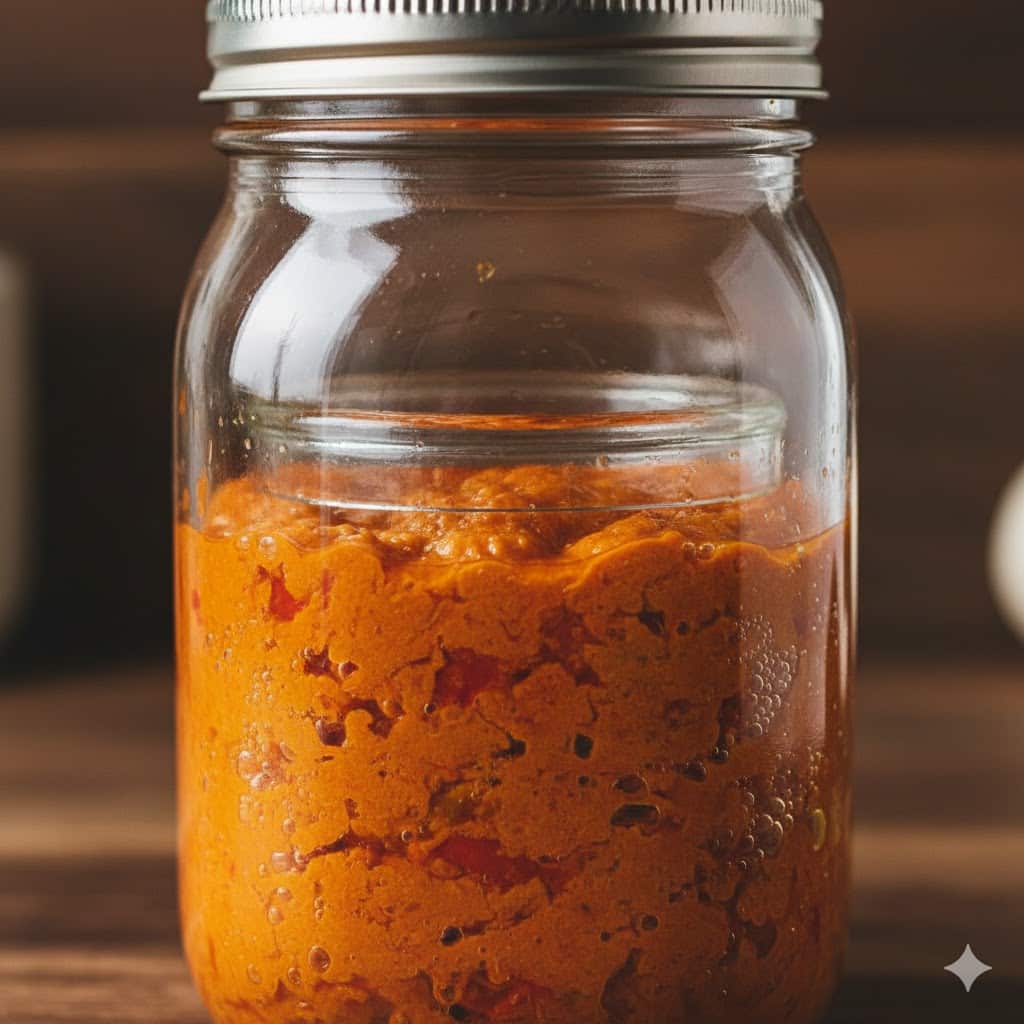
In the world of fermented hot sauce recipes, you will see two main styles: Brine Ferments (whole peppers submerged in salt water) and Mash Ferments (ground peppers mixed with salt).
We choose the mash method for this 7-day guide because it is faster and more concentrated. By breaking down the cell walls of the habanero immediately in a food processor, you release the sugars and moisture instantly. This gives the bacteria immediate access to their food source, resulting in a more vigorous fermentation that develops deeper flavors in just one week compared to the two or three weeks required for whole-pepper brining.
The Anatomy of a Habanero: Understanding the Heat
To make a world-class sauce, you must understand your star ingredient. The Capsicum chinense species, to which the habanero belongs, is famous for its floral, tropical, and apricot-like flavor profile. However, it is also famous for its heat, ranging from 100,000 to 350,000 Scoville Heat Units (SHU).
Where the Heat Lives
Many people believe the seeds are the hottest part of the pepper. This is a common culinary myth. The highest concentration of capsaicin (the chemical compound that creates the burning sensation) is found in the placenta—the white, pithy membrane that holds the seeds.
When we create our mash, we include the seeds and the membrane. Why? Because fermentation thrives on the oils found in these parts. As the peppers ferment, the capsaicin molecules are slightly altered and softened by the lactic acid, leading to a heat that “blooms” in the back of the throat rather than “stings” the tip of the tongue.
The Essential Role of Salt Chemistry
In a fermented habanero hot sauce, salt is not just a seasoning; it is a safety barrier.
1. The Halophilic Environment
Most spoilage-causing bacteria are “halophobic,” meaning they cannot survive in salty environments. Lactobacillus, however, is “halophilic.” By adding a precise amount of salt, we essentially build a fence around our peppers that only the good bacteria can climb.
2. The 2% – 3% Rule
For a successful mash, you need a salt-to-weight ratio of at least 2%. Using a digital scale is non-negotiable here.
- If you use too little salt: The mash may turn soft, slimy, or develop mold.
- If you use too much salt: You will kill the good bacteria and the fermentation will never start.
Mathematical Example: If your chopped peppers and garlic weigh 500 grams, you would multiply $500 \times 0.02 = 10$ grams of salt. This precision is what separates a professional hot sauce from a kitchen experiment.
Equipment: Building Your Fermentation Station
You don’t need a lab, but you do need the right tools to prevent contamination.
- Digital Scale: Must measure in grams for precision.
- Food Processor: To achieve a consistent “mash” texture.
- Glass Jars: Non-reactive and easy to sterilize. Avoid plastic, as it can harbor old bacteria and absorb odors.
- Fermentation Weights: These are small glass pucks that sit on top of the mash. They ensure the peppers stay submerged under the brine. Remember: “Below the brine, all is fine; above the brine, mold is a sign.”
- Airlock Lids: These allow the carbon dioxide ($CO_2$) produced by the bacteria to escape without letting oxygen in. If you don’t have these, you will have to “burp” your jars daily to prevent them from exploding.
The Recipe: 7-Day Fermented Habanero Mash
Ingredients
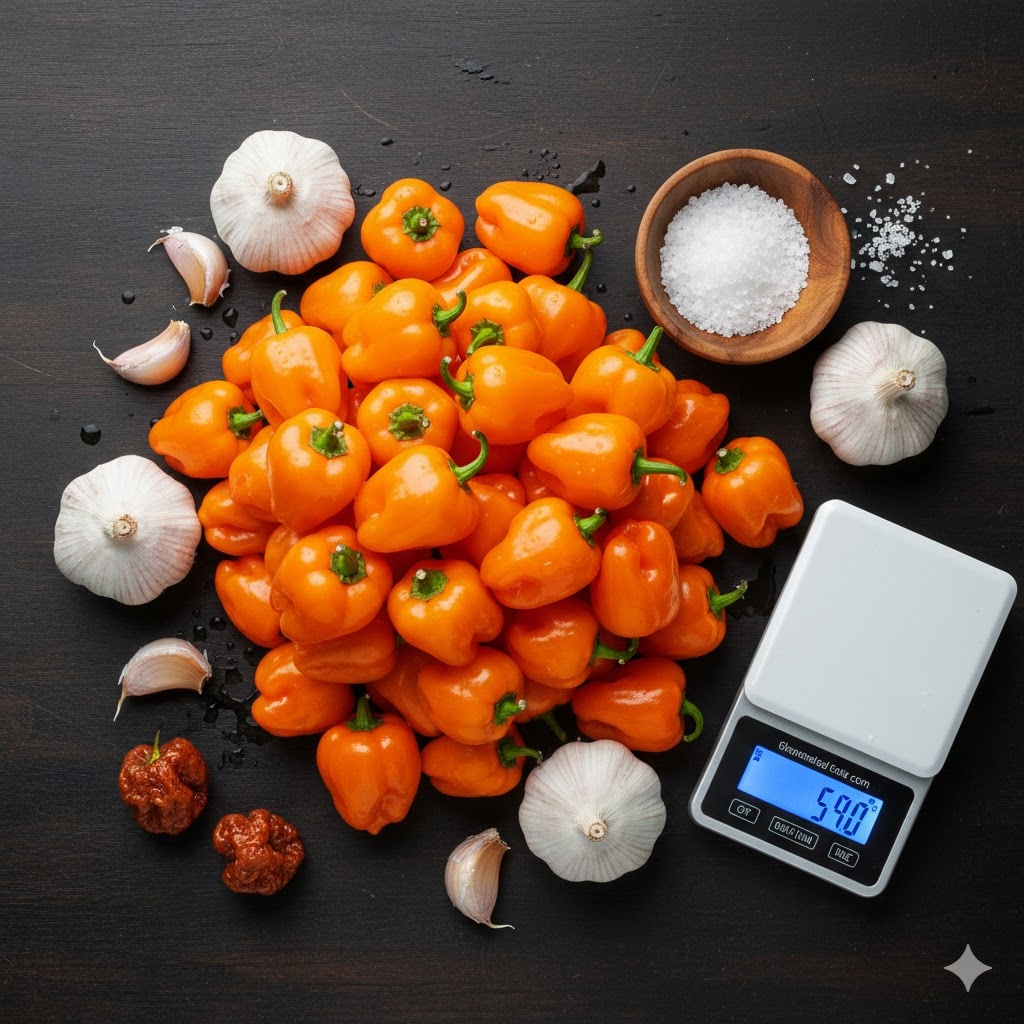
- 1 lb (454g) Fresh Habanero Peppers (stems removed)
- 6 Cloves Fresh Garlic (peeled)
- 2 tsp (approx. 12g) High-Quality Sea Salt (non-iodized)
- 1/2 Cup Apple Cider Vinegar (added after fermentation)
- Optional: 1 tsp Onion Powder or 1/2 tsp Smoked Paprika
Detailed Instructions
Phase 1: Preparation (Day 0)
- Sanitize Everything: Wash your jars, lids, and processor in hot, soapy water. For extra safety, rinse them with a 10% vinegar solution or boiling water.
- Process the Peppers: Place the habaneros and garlic in the processor. Pulse until the mixture looks like a coarse salsa. Warning: Wear gloves and eye protection. The fumes alone can be intense.
- The Salt Mix: Transfer the mash to a clean bowl. Add the salt and stir thoroughly. Let it sit for 20 minutes. You will see the mash begin to “weat”—this is the brine forming.
- Pack the Jar: Move the mash into your jar. Press down firmly with a spoon to eliminate air pockets. Place your glass weight on top. The liquid should rise above the peppers.
- Seal: Attach your airlock lid and place the jar in a cool, dark place ($18^\circ\text{C} – 24^\circ\text{C}$).
Phase 2: Monitoring (Days 1–6)
- Day 1: The mash may look settled. No movement yet.
- Day 3: This is the peak. You should see active bubbling. The color of the peppers will shift from a bright “neon” orange to a slightly muted, cooked-looking orange.
- Day 5: The bubbling will slow down. The aroma will shift from “raw pepper” to “pickled pepper.”
Phase 3: Finishing (Day 7)
- The Blend: Pour the contents of the jar (including the liquid) into a high-speed blender.
- The Vinegar Hit: Add the apple cider vinegar. This stops the fermentation process by dropping the pH even further and adds a bright acidity that balances the fermented “funk.”
- The Emulsifier: Add a tiny pinch of Xanthan Gum ($1/8$ tsp). This prevents the sauce from separating in the bottle.
- Bottle: Use a funnel to pour the sauce into “woozy” bottles.
Flavor Pairing: What to Do with Your Sauce
A fermented habanero sauce is incredibly versatile. Because it has a “funky” depth, it pairs well with:
- Fatty Meats: Carnitas, brisket, or pork belly.
- Acidic Fruits: Drizzle it over fresh mango or pineapple.
- Creamy Bases: Mix it into sour cream for a “Fermented Crema.”
- Seafood: The tanginess of the fermentation mimics lime juice, making it perfect for ceviche or grilled shrimp.
Troubleshooting: Safety First
The “Kahm Yeast” Issue
If you see a thin, white, dusty film on top of your mash, don’t panic. This is Kahm Yeast. It is not mold. It is safe to scrape off, though it can slightly alter the flavor if left too long.
How to Identify Spoilage
If you see fuzzy growth, or colors like black, green, or blue, the batch is compromised. This usually happens if the salt ratio was wrong or oxygen got into the jar. When in doubt, throw it out.
The pH Test
If you want to be 100% sure your sauce is shelf-stable, buy a digital pH meter. You are looking for a reading of 4.0 or lower. Most fermented sauces naturally hit about 3.5.
Conclusion: The Ultimate Heat Experience
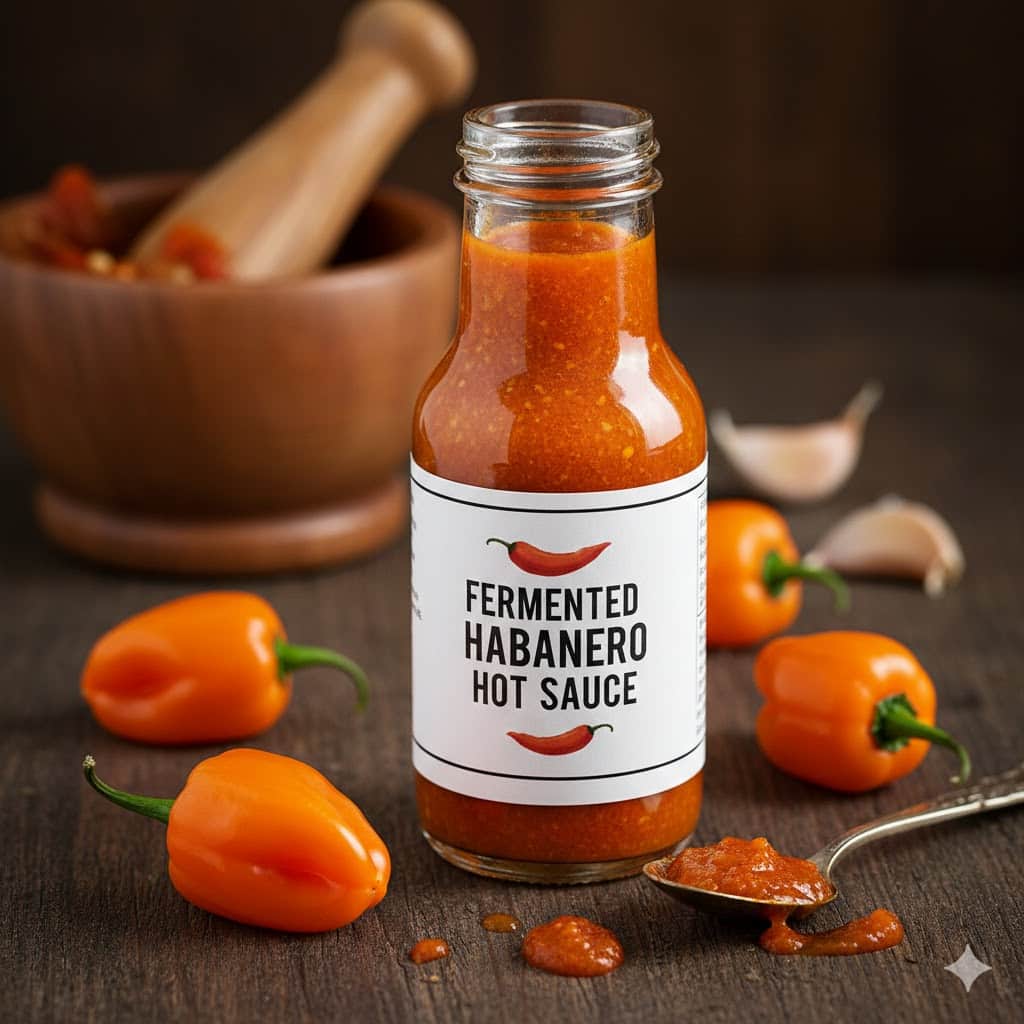
Mastering this fermented hot sauce recipe is about more than just making a condiment; it’s about understanding the relationship between time, salt, and flavor. This 7-day mash method is your gateway into the world of “living” foods. Once you taste the complex, tangy heat of a home-fermented sauce, the grocery store bottles will never satisfy you again.

Leave a Comment