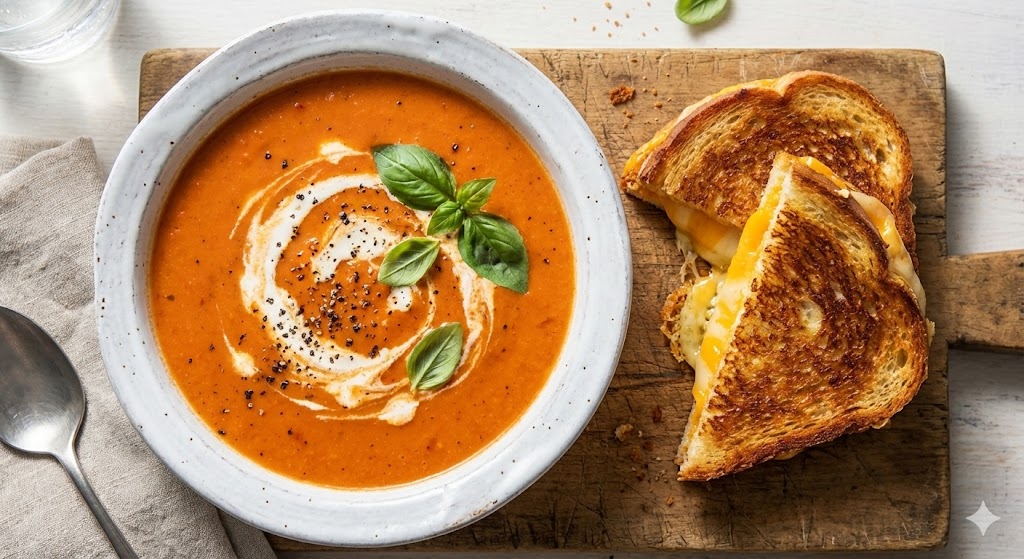
There are few dishes in the global culinary canon that evoke a sense of home quite like Creamy Tomato Basil Soup. It is the comfort food that transcends generations. It is the remedy for a rainy Tuesday, the cure for the common cold, and the undisputed champion of lunch when paired with a buttery, crispy grilled cheese sandwich.
But for too long, many of us have relied on the condensed version from the red-and-white can. While that brings a certain nostalgic value, it often lacks the complexity, vibrancy, and depth that fresh ingredients provide. The difference between canned tomato soup and a homemade roasted tomato basil soup is the difference between a sketch and a masterpiece.
In this ultimate guide, we are going to move beyond the simple “dump and simmer” method. We are going to explore the science of roasting, the chemistry of acidity balancing, and the art of emulsification. By the end of this article, you will not just have a recipe; you will have the knowledge to create the best soup you have ever tasted, right in your own kitchen.
The Philosophy of Flavor
Why Roasting Changes Everything
Most quick tomato soup recipes call for stewing canned tomatoes in a pot. While this yields a decent result, it misses out on the most powerful tool a cook has: The Maillard Reaction.
Tomatoes are fruits (botanically speaking) that are high in natural sugars and glutamates (umami). When you simmer them in liquid, the temperature never exceeds 212°F (100°C), the boiling point of water. However, when you roast them in an oven at 400°F (200°C), the surface moisture evaporates, allowing the sugars to brown and caramelize.
This process concentrates the flavor. A raw tomato tastes acidic and bright. A roasted tomato tastes savory, sweet, and complex. It develops notes of dried fruit, smoke, and rich earthiness. This is the “secret ingredient” that makes people ask, “What is in this?”
The Fresh vs. Canned Debate
Can you make good soup with canned tomatoes? Yes. San Marzano tomatoes from Italy are excellent, especially in the dead of winter when fresh produce is lackluster.
However, for the ultimate soup, we use a hybrid fresh-roasting method. Fresh Roma or Plum tomatoes have a brightness that canned tomatoes have lost during the preservation process. By using fresh tomatoes and roasting them ourselves, we control the texture and the flavor profile from start to finish.
The Ingredient Deep Dive
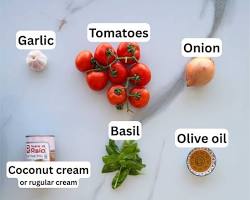
A dish with so few ingredients leaves nowhere to hide. Every component must be selected with care.
1. The Tomato Selection
Not all tomatoes are created equal.
- Roma (Plum) Tomatoes: These are the gold standard for sauces and soups. They have a low water content, thick flesh, and fewer seeds than salad tomatoes. This means your soup will be creamy and thick, not watery.
- Beefsteak Tomatoes: Avoid these. They are too watery and often granular when blended.
- Campari/Vine-Ripened: These are excellent sugar bombs. If you want a sweeter soup, toss a few of these onto the roasting tray.
2. The Basil
Fresh Basil is non-negotiable. Dried basil contains none of the volatile oils (eugenol, linalool) that give fresh basil its peppery, anise-like aroma. Dried basil tastes dusty and minty; fresh basil tastes like summer.
- Tip: We add the basil at the very end. Heat destroys these delicate oils. If you cook basil for 30 minutes, it becomes bitter and brown. If you stir it in at the last second, it stays bright green and fragrant.
3. The Cream Factor
The word “Creamy” is in the title, but how we get there matters.
- Heavy Cream (Double Cream): This provides the most velvety mouthfeel. The high fat content prevents the dairy from curdling when it hits the acidic tomatoes.
- Mascarpone Cheese: For a decadent twist, stir in a dollop of mascarpone instead of liquid cream. It adds a subtle sweetness and incredible thickness.
- Dairy-Free Options: Full-fat canned coconut milk is the best vegan substitute. The fat content mimics dairy well, and the slight coconut flavor pairs beautifully with the acidity of the tomato (think Indian cuisine).
4. The Aromatics
- Garlic: We roast the garlic with the tomatoes. Raw garlic is sharp and pungent; roasted garlic is sweet, spreadable, and nutty.
- Onions & Carrots: This is our mirepoix. The onion provides savory depth, but the carrot is the secret weapon. Carrots are naturally sweet. Adding a chopped carrot to the base eliminates the need to add refined white sugar to balance the tomato acidity.
Essential Equipment
You do not need a Michelin-star kitchen, but two tools will make your life easier.
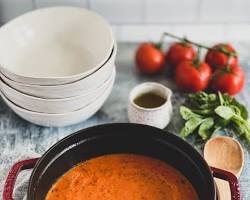
- Dutch Oven or Heavy-Bottomed Pot:Enamel cast iron (like Le Creuset or Staub) is ideal. It distributes heat evenly, preventing the thick soup from scorching on the bottom during the simmer. If you use a thin stainless steel pot, you must stir constantly.
- Immersion Blender (Stick Blender):This tool allows you to puree the soup directly in the pot. It saves you the danger and mess of transferring boiling hot red liquid into a countertop blender.
- Texture Note: An immersion blender creates a slightly rustic, textured soup. A high-speed countertop blender (like a Vitamix) creates a soup that is smooth as silk (a bisque). Choose your weapon based on your texture preference.
Step-by-Step Instructions (The Method)
Follow this detailed workflow to ensure perfection every time.
Phase 1: The Roast
- Preheat: Set your oven to 400°F (200°C).
- Prep: Wash 3 lbs (1.5kg) of Roma tomatoes. Cut them in half lengthwise.
- Tray Arrangement: Place the tomatoes cut-side up on a large baking sheet. This exposes the maximum surface area to the dry heat of the oven, encouraging evaporation.
- The Garlic Trick: Peel 6-8 cloves of garlic. Tuck them under the tomatoes or nestle them between the fruit. If you leave garlic exposed on top, it will burn and turn bitter before the tomatoes are done. Drizzle everything generously with olive oil, kosher salt, and black pepper.
- Roast: Bake for 40-45 minutes. You are looking for the tomatoes to be shriveled, soft, and sporting dark charred spots on the skins.
Phase 2: The Base
While the tomatoes roast, build your flavor foundation.
- Sauté: In your large pot, heat a tablespoon of butter or oil over medium heat. Add 1 chopped yellow onion and 1 chopped carrot.
- Sweat, Don’t Sear: Cook them gently for 10-15 minutes. We don’t want dark brown onions; we want them soft and translucent.
- Tomato Paste Boost: Add 1 tablespoon of tomato paste. Stir it into the onions and let it cook for 2 minutes. This “blooms” the paste, removing the metallic taste and adding a deep, savory bass note.
Phase 3: The Simmer
- Combine: Once the tomatoes are roasted, scrape them into the pot with the onions. Crucial: Scrape the baking sheet! Those sticky brown bits (the fond) are pure concentrated flavor. Use a splash of broth to dissolve them and pour it into the pot.
- Liquid: Add 3 cups (720ml) of chicken stock (or vegetable broth).
- Simmer: Bring to a gentle boil, then reduce heat to low. Cover the pot. Let it simmer for 20 minutes. This is not just to heat it up; it is to soften the carrots completely so they blend seamlessly.
Phase 4: The Blend & Finish
- Herbs: Remove the pot from the heat. Toss in 1 cup of fresh basil leaves. They will wilt instantly.
- Blend: Use your immersion blender to puree until smooth.
- Emulsify: Stir in 1/2 cup (120ml) of heavy cream. Watch the color transform from deep brick red to a creamy, inviting sunset orange.
-
The Final Seasoning: Taste the soup. This is where you become the chef.
- Too acidic? Add a pinch of baking soda or sugar.
- Too bland? It likely needs more salt.
- Too rich? A squeeze of lemon juice or a dash of balsamic vinegar.
Troubleshooting Common Issues
Even the best cooks run into trouble. Here is how to fix your soup.
Problem: The soup is too sour/acidic.
- Cause: Tomatoes vary in acidity based on the season. Winter tomatoes are more acidic.
- Fix: The “Baking Soda Hack.” Add 1/4 teaspoon of baking soda. It is alkaline and will neutralize the acid immediately. It will foam slightly—this is normal! Stir and taste. Alternatively, add brown sugar 1 teaspoon at a time.
Problem: The texture is grainy.
- Cause: The skins of the tomatoes were tough, or the carrots weren’t cooked enough.
- Fix: Pass the soup through a fine-mesh sieve (strainer). This turns a rustic soup into an elegant bisque. It takes 5 minutes of elbow grease but guarantees smoothness.
Problem: The dairy curdled.
- Cause: You added milk or cream to boiling acidic liquid, or used low-fat milk.
- Fix: Once curdled, you can’t truly “un-curdle” it, but you can hide it. Blend the soup again on high speed. The mechanical force can re-emulsify the solids. Next time, use heavy cream (more fat = more stability) and turn the heat off before adding it.
Problem: It lacks depth.
- Fix: Umami is missing. Add a splash of soy sauce (yes, really!), a rind of parmesan cheese during the simmer, or a dash of Worcestershire sauce.
Serving Suggestions & Pairings
Tomato soup is rarely a solo act. It demands texture to contrast the creaminess.
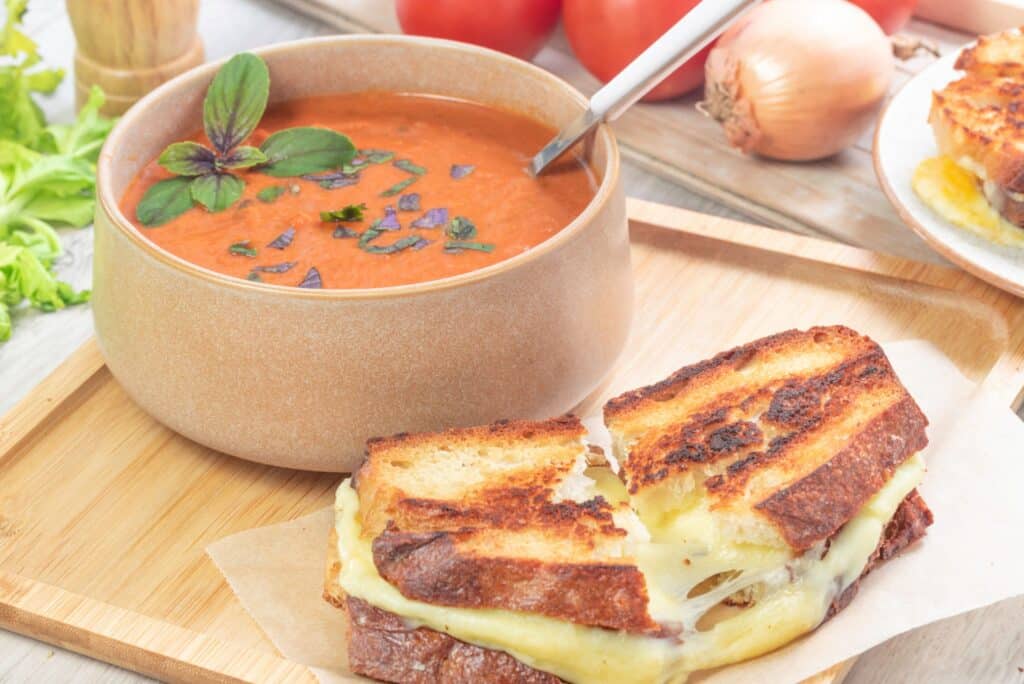
The Ultimate Grilled Cheese
You cannot have one without the other.
- Bread: Use a sturdy sourdough or ciabatta. Soft white bread dissolves too fast.
- Cheese: Use a blend. Sharp Cheddar for flavor, Gruyère for nuttiness, and Mozzarella for the “cheese pull.”
- The Fat: Spread mayonnaise on the outside of the bread instead of butter before frying. Mayo has a higher smoke point and creates a crispier, golden crust.
Other Toppings
- Parmesan Crisps: Bake piles of grated parmesan on a silicone mat until crisp. Break them into shards for a salty crunch.
- Pesto Swirl: Drizzle basil pesto on top just before serving for an extra herby punch and professional look.
- Spicy Oil: If you like heat, drizzle with Calabrian chili oil.
Wine Pairing
- White: A crisp Sauvignon Blanc cuts through the acidity of the tomatoes.
- Red: A light-bodied Italian red like a Chianti or Barbera pairs beautifully with the roasted notes.
Dietary Variations
- Vegan: Swap butter for olive oil. Use vegetable stock. Swap cream for coconut milk or cashew cream (soaked cashews blended with water).
- Gluten-Free: The soup is naturally gluten-free (ensure your broth is certified GF). Serve with GF bread.
- Keto/Low Carb: Skip the carrots (they are higher in sugar) and roast red peppers instead. Use heavy cream and keep the onion content moderate.
Recipe Card: Roasted Creamy Tomato Basil Soup
Prep Time: 15 mins | Cook Time: 45 mins | Total Time: 1 hr | Yields: 6 Servings | Calories: ~280 kcal
Ingredients
- 3 lbs (1.5kg) Fresh Roma tomatoes, halved lengthwise
- 6-8 cloves Fresh garlic, peeled
- 3 tbsp Extra virgin olive oil
- 1 large Yellow onion, chopped
- 1 medium Carrot, peeled and chopped (the secret sweetener)
- 1 tbsp Tomato paste
- 3 cups (720ml) Chicken stock or vegetable broth
- 1 cup Fresh basil leaves (packed)
- 1/2 cup (120ml) Heavy cream
- 1 tsp Kosher salt (plus more to taste)
- 1/2 tsp Black pepper
- 1/2 tsp Red pepper flakes (optional, for warmth)
- Garnish: Grated parmesan, fresh basil, olive oil drizzle.
Instructions
- Roast: Preheat oven to 400°F (200°C). Arrange tomato halves and garlic cloves on a baking sheet. Drizzle with 2 tbsp olive oil, salt, and pepper. Roast for 45 minutes until charred and soft.
- Sauté Base: While roasting, heat 1 tbsp oil in a Dutch oven. Add onion and carrot. Cook 10-15 mins on medium-low until soft. Stir in tomato paste and red pepper flakes; cook 2 mins.
- Simmer: Add the roasted tomatoes, garlic, and any pan juices to the pot. Pour in the broth. Bring to a boil, reduce heat, cover, and simmer for 20 minutes.
- Blend: Remove pot from heat. Stir in the fresh basil leaves. Use an immersion blender to puree until smooth.
- Finish: Stir in the heavy cream. Taste carefully. Add more salt or pepper if needed. If too acidic, add a pinch of sugar. Serve hot.